Bartosz Szydlowski
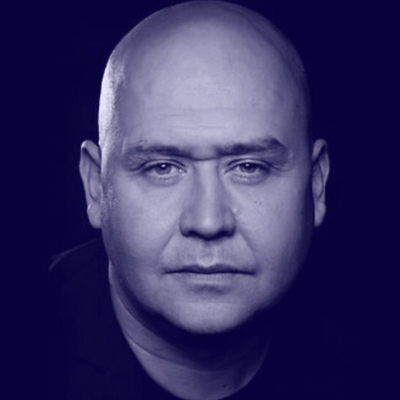
Bartosz Szydlowski
Director Divine Comedy International Theatre Festival
NO PASARAN
One of those phrases that history has turned into a symbol. Short, unconditional, leaving no room for negotiation. “They shall not pass.” The rallying cry of the defenders of the Spanish Republic, forever bound up with the voice of Dolores Ibárruri and the defence of Madrid against Franco’s forces.
Today it sounds unsettlingly relevant once again. We hear it raised against exclusion and contempt. Against a populism that is losing all sense of shame and turning ever more readily to violence. Against pointing the finger at outsiders, building walls, instrumentalising fundamental rights, numbing us to the suffering of others. Against a world in which what only recently seemed unspeakable is now spoken out loud, unabashedly, and often to applause.
Here, the answer seems simple: No pasarán.
And yet I find the simplicity of this gesture somewhat unsettling. It is so easy to make ourselves at home in opposition, it is so pleasant to belong to a family of shared values.
It is easy for us to point to the monster standing on the far side of the bridge. It is far harder to ask why it ever reached that bridge at all.
Has everything we protest against today really come from outside? Did anger, radicalisation, distrust of democracy, and the rejection of liberal language appear out of nowhere, like some deus ex machina of history? Or perhaps we, too – artists, the intelligentsia, the liberal and progressive elites – ought to ask about our own sins of omission? About complacency. About a language in which we have forgotten how to talk to a section of society. About a progressivism that was at times more concerned with being right than with reality. About those whose experiences have found no place in our story.
This is not about a symmetry of blame. Contempt does not become any less dangerous because we can describe its roots. Violence does not become justified because someone once felt unheard. But if culture is to be a space of freedom, it must have the courage to turn the spotlight on itself as well.
All the more so as we ourselves are going through a crisis today. Culture remains on the margins of the political imagination. It is still treated as an ornament of democracy rather than one of the places where democracy learns to speak, to argue, to recognise the other. As if we had forgotten that politics is fought not only over legislation, institutions and money. It is also fought over imagination. Over language. Over who will narrate the world to us – and how.
The Right has grasped this power of storytelling. The liberal Centre, it seems, still does not quite believe in it. The left is locked in an internal bidding war over who is more anti-liberal, and remains indifferent to fascism And that is why a scene from The Lord of the Rings keeps coming back to me. Gandalf is standing on the Bridge of Khazad-dûm, facing the Balrog, and saying: “You shall not pass!” He stops the monster, but he himself falls with it into the abyss. Victory, then, does not mean remaining unscathed. He has to pass through darkness. Only then does he return as Gandalf the White.
Perhaps today it is precisely this second half of the story that I find interesting.
Not only how to stop the monster. But who we ourselves will be once we’ve emerged from that fight.
Theatre builds worlds that are, by definition, untrue. Simulations. Bodies pretending to be other bodies, deaths from which the actors rise again, stories that exist for but a few hours. And yet, more and more often, I have the feeling that it is precisely in this make-believe reality that we preserve something more real and more essential than in the world outside the theatre.
Empathy. Doubt. Dissent. The right to weakness. The capacity to see the world through another person’s eyes. Courage in place of boorishness and brazenness.
Perhaps, then, No pasarán means more than “we will not let you pass”. For even if you do pass, we still will not let you take from us what we believe in, what constitutes our European identity. Who we want to be.
This text is based on the introduction to the 2026 edition of the Divine Comedy Festival.
