Christos N. Karakasis
Can independent cinema give Europe back its gaze?
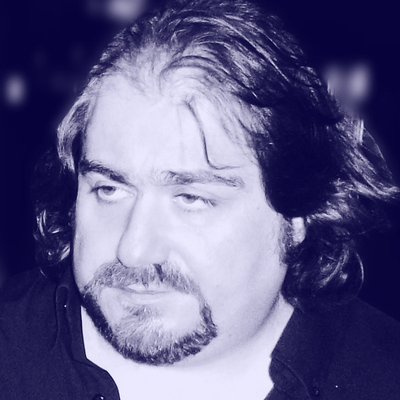
Film and Theatre Director, Producer, Writer & Artistic Director of Athens International Digital Film Festival
In a Europe that is changing rapidly, the question is not only what kind of Europe we want to build, but also whether we are still able to look at it with our own eyes. We live in an age where images multiply endlessly. Screens, platforms, algorithms, artificial intelligence, social networks. Never before have we had access to so many images, and perhaps never before has it been so difficult to distinguish which of them truly concern us. Within this abundance of images, independent cinema continues to ask a different question: What is really worth looking at?
The independent filmmaker does not always begin with a market, a trend, or a predetermined answer. They begin with a need: with a personal gaze, an anxiety, an image that refuses to leave them alone. And perhaps this personal gaze is precisely one of Europe's greatest needs today. A Europe of many voices.
Europe is not a single image. It is many images existing side by side. It is the Mediterranean and the North, East and West, the great metropolises and the small towns, different languages, histories, memories, and cultures. It is countries carrying different experiences of war, division, dictatorship, migration, economic crisis, and social transformation. For this reason, European identity cannot be uniformity. Perhaps Europe exists more within difference than within similarity.
Cinema has the ability to capture this difference without erasing it. It can carry a story from Athens to Madrid, from Berlin to Helsinki, from a small village to a European capital, and suddenly a personal story can acquire a shared meaning. The viewer may not understand the language of the film, but may recognise a gaze, a loss, a love, a fear, a need for freedom.
Cinema beyond borders
This is where Europe begins as a cultural experience. Europe is a continent of borders. Geographical, political, historical, economic, and often invisible borders. Yet the cinematic image can cross them. A film does not need a passport to travel. It can move from one country to another, meet a viewer who knows nothing about its creator, carry an experience born in one place and acquire a new meaning somewhere else. This is why European film festivals can become bridges between societies. Not because they offer a ready-made idea of Europe, but because they create a space where Europe's different voices can meet. Independent cinema can become such a meeting place.
The Europe of Memory
Every European society carries memories. And every generation decides what it will preserve and what it will forget. Cinema is one of the ways through which Europe remembers. It remembers its people, its cities, its conflicts, its losses, and its hopes. It preserves not only great historical events, but also small personal histories: a house, a photograph, a voice, a face, a gesture. Against the danger of collective forgetting, the cinematic image can function as a carrier of memory. And perhaps today this has an even greater significance, at a time when the speed of information threatens to make yesterday disappear before it has had time to become memory.
Democracy, freedom, and the independent gaze
Independent cinema also has a deeper European dimension: freedom of expression. The freedom to question, disagree, look from the other side, to create without knowing in advance whether an image will be easy, commercial, or acceptable. A democratic Europe needs a cinema that can ask it difficult questions. Not merely to confirm what we already know, but to force us to look at what we prefer to avoid. Independence, therefore, is not merely a method of production. It is an attitude toward the image, society, and reality itself.
And today a new border is emerging: the border between the human being and technology. Artificial intelligence is transforming the way we create, process, and distribute images. Cinema is entering a new era, where the tools are multiplying and the boundaries between physical and artificial images are becoming increasingly difficult to distinguish. But the real challenge is not whether a machine can create an image. The real challenge is: Who has something to say through it? Europe is facing this transformation, and culture cannot remain outside the conversation. Technology can become a tool for democracy, access, and creativity, but it can also lead to a greater homogenisation of the image. Independent cinema can claim a crucial role here: to use technology without allowing technology to determine the gaze.
From the periphery to the centre
There is also another European question. Who has the right to tell Europe's stories? For many years, Europe's cultural image was shaped primarily by its major centres. But Europe does not end at its capitals. It also exists in the periphery. In smaller filmmaking communities. In emerging creators. In countries and regions that often feel distant from cultural centres. In personal stories that do not have easy access to the major mechanisms of production and distribution. Independent cinema can change this direction. It can allow the image to move from the periphery to the centre, and from the centre back to the periphery. Athens does not only need to look toward Europe. Europe can also look toward Athens. And through Athens, toward another Greece.
The festival as a European public space
A film festival is not merely a series of screenings. It is a temporary community. People from different countries meet through films that may speak different languages, yet touch upon common human concerns. There, something can emerge that no algorithm can create on its own: a living encounter. The festival becomes a public space for dialogue. And the 15th Athens International Digital Film Festival - AIDFF can see this role not simply as a cultural activity, but as part of a broader European conversation: What do we want European culture to become in the coming decades? A Europe more open or more closed? A Europe that fears difference or recognises it as a source of creativity? A Europe where technology replaces thought, or a Europe where technology serves the human being? A Europe that consumes images, or a Europe that continues to create gazes? What Does “New” Mean?
Perhaps new cinema is not simply cinema that uses new technologies. New is cinema that sees differently. Technology can create an image. The human being must decide which image is worth creating. This may be the real challenge for independent cinema: not to fear technological change, but neither to surrender its own gaze to it. To use new tools without losing human doubt.
The European Gaze
Perhaps the “European gaze” is not a particular aesthetic style, nor a single ideology. Perhaps it is the ability to look together without all looking in the same direction. To disagree and still coexist. To carry different memories without denying the memory of the other. To speak different languages and still communicate. To have different histories and yet recognise the same human being in one another. This may be the great challenge of European culture. And cinema can become one of the tools of this encounter. Not because it can provide solutions. But because it can create questions that we share.
The Gaze as an Act of Freedom
In a world where more and more images are produced, recommended, and consumed automatically, choosing where to look becomes an act of freedom. Independent cinema can look where commercial images often have little reason to look. At the margins. At the personal. At the uncertain. At the imperfect. At silence. At memory. At the human being. And perhaps this is its true European responsibility: not to give Europe a single image of itself, but to allow it to see the many images that make it what it is. Because Europe does not necessarily need more images. It needs more gazes. Gazes that are different, free, restless, unconventional. Gazes that are not afraid to question what is considered self-evident.
From Greece to Europe
The 15th AIDFF seeks to enter this conversation from Athens, from Greece, from the space of independent cinema. Not as an institution that has all the answers, but as a space that wants to ask questions. To create bridges between filmmakers and audiences. Between different countries and cultures. Between tradition and technology. Between memory and the future. Because perhaps Europe needs, more than ever, spaces where people can meet face to face. And cinema can be such a space. Perhaps, then, the question is not ultimately whether independent cinema can give Europe back its gaze.
Perhaps the real question is: Can Europe, through independent cinema, learn to look again? To look at itself. At the other. At its past. At its present. At its future. And above all, at the human being. Because a Europe that no longer looks is a Europe in danger of forgetting. And a Europe that continues to look, to question, and to search is perhaps a Europe that remains alive.
15th AIDFF - From Athens to Europe. Where the image is not only something we see. It is a gaze. And a gaze can still become a dialogue.
