
Eric Corijn
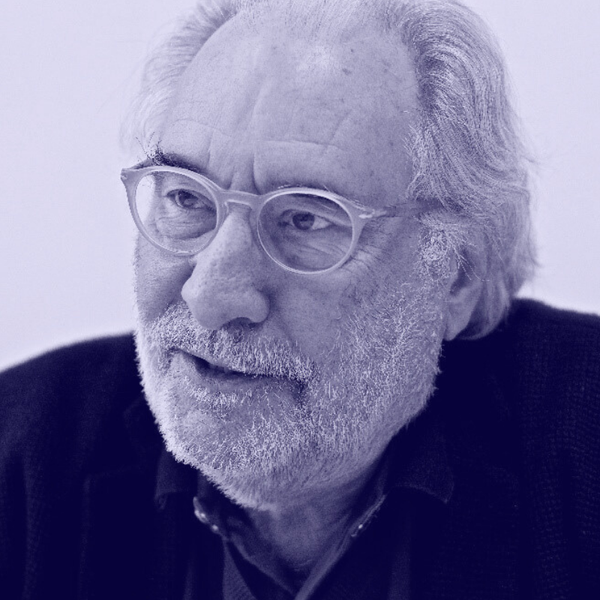
Eric Corijn, Cultural Philosopher & Social Scientist
Updating the European narrative accordingly
Chapter 8 in the essay “In Defence of Democracy…THE UNITED CITIES OF EUROPE”, 2025.
"Europe is made up of coffee houses, of cafés", says Georges Steiner[1]:
"Draw a map of cafés and you have one of the essential markers of the 'idea of Europe'.”
The café as a public place of diversity, encounter and public discussion. Europe is also 'walked', he says, structured by distances on a human scale, parallel to human and historical time. This space is also laden with collective memories, stories from the common past, and even crushed by the weight of the past. According to Steiner, a fourth axiom flows from this past, 'the dual heritage of Athens and Jerusalem', a conflictual and syncretic relationship that forces Europe to negotiate rival ideals. The fifth element is an eschatological end with two world wars (European civil wars), approximately 100 million deaths and a degree of “suicidal inhumanity”:
"Ethnic hatred, chauvinistic nationalism and regional demands were Europe's nightmare".
And yet the ideal of harmony is undeniable. How should we view the future? Steiner does not know:
"How can we reconcile the conflicting demands of political and economic unification and those of creative individuality? (...) I don't know the answer. Only that these wiser than myself must find it, and that the hour is late."
In any case, the philosopher believes that Europe will have to transcend the trauma of the Holocaust and the inhuman xenophobic monoculture to achieve its own identity. Stefan Zweig[2], for his part, in his relentless plea for European unity, contrasted the "sacro-egoismo" of nationalism with the "sacro-altruismo" of the European idea. This remains, more than ever, the contradiction of today.
The argument developed in this essay offers a critical reflection on the history of the construction of Europe as the creator of a European world system and of the idea of the nation-state. In this sense, Europe has contributed to the construction of "the West" as a junior partner in the structuring of American world hegemony. This global framework has defined and delimited the European unification project as a market-oriented intergovernmental cooperation, with politics and culture remaining an exclusively national domain. That cycle is now coming to an end. Geopolitics, the new conservative nationalism and the authoritarian temptation are jeopardising the European unification project. The Draghi report[3] speaks of an existential threat.
This particular history of the construction of the European Union has overshadowed several structural elements that have been omitted from the narrative. The Renaissance and the Enlightenment were essentially the result of the late medieval development of relatively autonomous cities, city-states and an urban bourgeoisie that eventually replaced the nobility and the clergy. A bourgeois revolution that replaced the feudalism so characteristic of Europe. Urbanity gave rise to ideas of freedom, equality and citizenship. These were then, and only then, 'nationalised' with the creation of nation-states, reducing cities to 'places' within the country. Nationality suppressed urbanity. Nationality created a common narrative that produced tradition and identity and legitimised representative democracy within national borders. Uniformity and community were identified within highly diverse national territories.
Today, the continent is being shaken by the ongoing war, Washington's changing position, rearmament, internal divisions... Europe could also take its own position in world politics today. It could radically defend the democratic model, (re)consider its defence policy and defence alliances, and thus take a stand in conflicts within and outside the continent. In short, it could develop its own voice, independent of prior contact with Washington or the unresolved German trauma of the Holocaust. A position that defends a multilateral world order against any hegemony and any camp mentality.
Globalisation and the mobility of people, supported and structured by the European Union, have changed the 'imagined communities'[4] that are national societies. Most people now live in cities. These cities are in a post-industrial transition phase. Their hinterland is connected to the space of flows, of constant interaction and interplay. Their populations are becoming multiethnic, multicultural and multiconfessional. National models of socialisation are becoming obsolete and dysfunctional. We reiterate that the cohesion of a city cannot be based on common roots, a shared history or an established tradition, but requires a common destiny, a project, a plan for the future. While countries refer to a common history, cities need a vision, a project that transcends diversity. Such an urban project can only be hybrid, mixed and intercultural, with the aim of bridging diversity and differences. That is why classical representation and representative democracy must be expanded to include participation and co-production. And that is why territorial boundaries must be opened in collaborative networks. In short, democracy must be reinvented.
A city is not a country! The city is closer to the world than a country. Urbanity must be developed as a post-national way of life that goes beyond fixed identities and traditions. The tension between nationality and urbanity will only increase. In all countries with authoritarian tendencies, we see cities resisting this. That is why cities must actively work on the urban narrative and place art and research at the heart of the urban project. Every city must tell its own specific story of creolisation, of cosmopolitanism[5]. In this sense, cities and urbanity offer a better platform for European conversation than countries that primarily emphasise their uniqueness and thus their differences. This urban imagination can be linked to the European character under construction and can be a source of inspiration for a European cultural policy. It could occupy a specific position in the geopolitical reconstruction of the world system.
This development will not negate the need for a state administration that connects different places in a larger area. But that state will have to rid itself not only of state religion, but also of state culture. After all, the increasing importance of urbanity within these states raises the question of forms of social cohesion. The multicultural character of urban life calls into question the foundations of the modern nation-state and monocultural models of assimilation.
The Enlightenment in the long eighteenth century considered the possibility of living together without sharing the same religion and introduced the separation between the state and (multi)religion. This principle has not yet been adopted by many countries in the world, and we know that dictators like to have the support of their god. It remains an element in many undemocratic regimes around the world. In the concept of the secular nation state, however, the state religion has been replaced by a national culture. If there is no state religion, there is a state culture.
Urbanity is a social form based on diversity and versatitility and introduces a form of citizenship and connectedness that goes beyond a single culture and religion. Maintaining a functional state that connects different places requires a relaxation of strict cultural and linguistic identities and the development of an intercultural sense of belonging in which spaces, infrastructure, common goods and governance are shared. This is precisely what sectarian nationalism or other forms of essentialist fundamentalism oppose.
By rethinking Europe as a network of cities and metropolitan regions, not only can the idea of 'European-ness' as a common way of life that respects difference and diversity be deepened, but urbanity and the urban way of life can also be seen as a living laboratory that nourishes European solidarity and cohesion. The urban transcends borders. Deepening urban democracy is essential to allow this intercultural city to emerge and to displace communitarianism and sectarian fundamentalism. It is also essential as a place of resistance to the authoritarian temptation of conservative nationalism.
We consider this argument to be the only rational construct arising from the announced crisis of the European Union, based on the preservation of the nation state, to open the debate and take a different approach. Let us not limit the choice to conservative and authoritarian nationalism or neoliberal opacity through a bureaucratic apparatus. Let us give expression to a different European reality, develop a vision of European citizenship and use the media, the presidencies and the elections for this debate. A Europe that defends a radical cosmopolitan democracy. That could become the profile of a renewed European Union. That would be revolutionary.
[1] Steiner, G. (2004): The idea of Europe. Essay. Tilburg: Institut Nexus
[2] Zweig, S. (2013): Einigung Europas, eine Rede, Salzburg & Paris: Tartin Editionen
[3] https://commission.europa.eu/topics/eu-competitiveness/draghi-report_en
[4] Anderson, B. (1983): Imagined communities: reflections on the origin and spread of nationalism, London: Verso
[5] Appiah Kwame A. (2006): Cosmopolitanism. Ethics in a world of strangers, New York: W.W.Norton; Harvey, D. (2009): Cosmopolitanism and the Geographies of Freedom; New York: Columbia University Press; Nussbaum, M. C. (2019): The Cosmopolitan Tradition: A Noble but Flawed Ideal, Boston: Belknap Press.
