
Iris Jugo
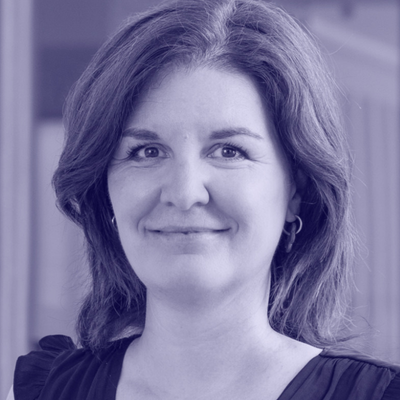
Iris Jugo, General Coordinator of Cáceres 2031 European Capital of Culture
©Mario Rey
Europe was, above all, a promise of peace. Today, that promise needs to be heard again, because Europe does not begin in Brussels: it begins (or is lost) in every town where people no longer feel they belong to it.
After a devastating war that left both Europe and the wider world in ruins, a group of visionary men and women chose unity over division. They laid the foundations of what we now know as the European project.
The origins of this project can be traced to the aftermath of the Second World War (1939–1945), a conflict that claimed more than 60 million lives and left the European continent deeply fragmented. In this context, an urgent need to secure lasting peace through cooperation emerged. One of the leading architects of this vision was Jean Monnet (1888–1979), widely regarded as one of the founding fathers of the European Union. From his pragmatic perspective, Monnet believed that peace could not rely solely on political agreements but had to be built upon economic interdependence among nations.
This vision took shape in the Schuman Declaration of 9 May 1950, which proposed placing the coal and steel production of France and Germany under a common authority. As a result, the Treaty of Paris was signed in 1951, establishing the European Coal and Steel Community (ECSC), initially comprising six member states: France, West Germany, Italy, Belgium, the Netherlands, and Luxembourg. A few years later, in 1957, the Treaties of Rome expanded this cooperation by establishing the European Economic Community (EEC).
Built upon these principles, and united under what would later become its motto, "United in Diversity", a project began that has arguably become the greatest peace project of our time.
Yet today, after years of gradual erosion, this European vision, this sense of belonging to something greater than the individual, the local community, or even the nation, is increasingly threatened and weakened. It is at this moment that those who never imagined they would need to speak about Europe step forward: municipalities, artists, festival associations, and foundations.
The work here at the Jean Monnet House these days — where, one could say, it all began — is about acting on a different level, one that is closer to citizens, so that what has been built with such effort is not lost. Populism, nearby wars, confrontation, hate speech, borders, and rising walls all endanger the European project.
A project that is, at its core, nothing more than a commitment to peace, mutual respect, and a shared sense of belonging rooted in diversity and, above all, in humanist values.
We find ourselves searching. We are debating. We are trying to understand how such a vast idea can truly reach citizens with limited resources.
From our associations, municipalities, local governments, and rural communities, we call for effective action, sustained financial support, and meaningful training that goes beyond good intentions, established practices, and spaces for dialogue. We need the tools to ensure that every citizen (regardless of whether they live in rural, peripheral, or underserved areas) feels included once again and recognises this as their project: their project of peace, their Europe.
As Cáceres 2031 advances on its journey toward becoming a city that safeguards heritage, creates spaces for encounter, and welcomes both local and European artists in Cáceres and throughout Extremadura, it becomes part of this wider conversation. We feel both honoured and deeply responsible for the mission entrusted to us.
We are grateful that this journey—and our selection as finalists for the title of European Capital of Culture 2031—has brought us to places like this. We return home with new ideas, renewed hope, and a strong determination to ensure that the European project takes root through the arts, culture, researchers, networks, festivals, and, ultimately, through every citizen who understands peace as a vital necessity.
As essential as the water we drink. As familiar as birdsong in the morning. As important as preserving and caring for the legacy we have inherited.
In Cáceres, that legacy can be seen in every stone, every street, and every aspiration to grow as both a city and a region, embracing Europe while amplifying the voices of those who have not always felt heard.
We would also like to express our deepest gratitude to the Yuste Foundation, which, from the heart of Extremadura, creates these invaluable spaces for dialogue and exchange, inspiring those who work tirelessly to rebuild, revitalise, and bring the European project closer to people's everyday lives.
Too often, this work remains invisible. Few realise the extent to which people across this beloved old continent strive every day to preserve what Europe represents.
We hope that ordinary citizens will feel the impact of these encounters, these conversations, these aspirations, and these calls for better training, greater cooperation, and continued progress as we build, together, a shared future.
Because, ultimately, that is what our candidacy's motto, Transcultura, stands for: transcending borders, transcending inherited knowledge, embracing new perspectives, including those who are most vulnerable, and making culture a powerful instrument for peace, co-creation, and participation.
Written at the Jean Monnet House in Houjarray, France, on 21 April 2026.
