João Carlos
Visual Language Is What Binds Europe Together
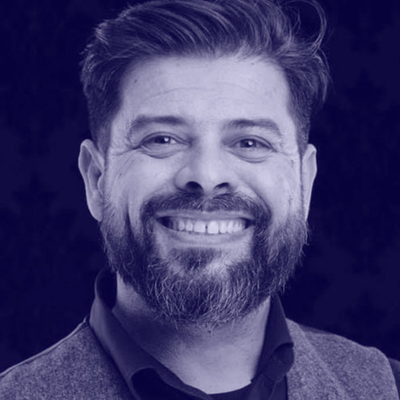
President of FSOS Association, Programmer & Cultural Director of F262 Photography Festival
I have always understood Europe through images. As a photographer, I have learned that visual language can cross borders in a way that words sometimes cannot. A photograph can communicate something about a person, a place or an experience without needing to be translated. It can make us recognise something familiar in a place we have never been, or make us look again at something we thought we already understood.
This is how I see Europe. Europe is made up of different languages, histories, traditions and identities. I don't see that diversity as a problem to solve. I see it as one of Europe's greatest strengths. What matters is how we create opportunities for those differences to meet, to be seen and to be understood.
For me, festivals are one of the places where this can happen most naturally. A festival is rooted in a particular place, with its own history, people and character, but it can also open that place to the world. Artists come from different countries and backgrounds. Audiences encounter ideas and forms of expression they may not otherwise experience. Local communities have the opportunity not only to receive international culture, but also to contribute to the conversation. That exchange works in both directions.
This is why I believe in Think Global, Act Local. Thinking globally does not mean trying to make a local festival look international. It means being open to what is happening beyond our borders, looking for artists, ideas, experiences and conversations that can bring something new into a place.
Acting locally means doing that in a way that makes sense for the community, the territory and the people who live there. It means starting from what already exists rather than replacing it.
A strong sense of place is important. Local identity is not a limitation on international exchange. It is what gives that exchange meaning.
“Europe does not need cultural uniformity. It needs cultural exchange.”
I see this in my own work with photography, and increasingly through the cultural projects and festivals I am involved in. Photography gives us a particularly direct way of creating connections because images can travel easily, but the context in which we encounter them matters enormously. Where an image is shown, who is looking at it, and what conversations take place around it can change the way we understand it.
The same thinking is behind the Casa-Museu Jaime Umbelino and CEF – Centro de Experimentação da Fotografia. Its starting point is deeply local: one house, one collection, one history, one person and a particular relationship with a place. But its purpose is not simply to preserve that history. It is to create opportunities for those photographs, books, objects and memories to enter new conversations about photography, culture, memory and identity. The local becomes a starting point, not a boundary. I think this is important at a European level too.
We are living in a time when we have access to more images than ever before, but that does not necessarily mean we are seeing more. Digital platforms can connect us, but algorithms can also narrow what we encounter, showing us more of what we already know. Cultural organisations, festivals, museums and artists have a responsibility to create different kinds of encounters. We can bring international artists into local communities. We can give local stories a wider audience. We can place contemporary work alongside historical material. We can create spaces where people encounter something they would never have found through their usual channels. We can do this without losing the particular character of the places where we work. For me, this is one of the most interesting possibilities for European cultural life. We don't need one European visual identity. We need many visual voices that are able to see one another.
Photography has taught me that looking is already a form of connection. Festivals give us the opportunity to turn that connection into an encounter between people, places and perspectives. So these two ideas belong together: Visual Language Is What Binds Europe Together, it’s how I see it. Think Global, Act Local is how I try to put it into practice.
We can remain deeply connected to the places we come from while being open to the people, ideas and perspectives beyond them. For me, that is not a contradiction. It is precisely what makes a European cultural life possible.
