Paul Dujardin
Europe must keep its doors open: Culture, security and the practice of democracy
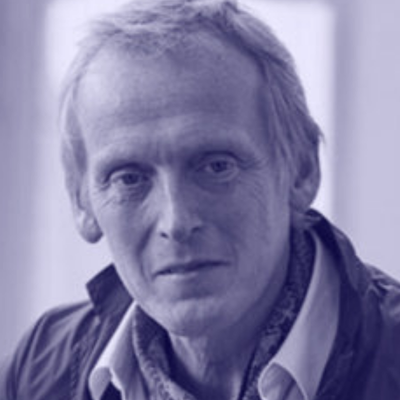
European Cultural Strategist, Former CEO at Bozar & EFA Honorary Member
11 September 2026 - Twenty-five years after 9/11
“When terror seeks to close public space, culture must open its doors.”
Paul Dujardin, 2016
On 11 September 2001, as images of the Twin Towers reached Brussels, the authorities and security services called for public buildings to close. Yet that day, we succeeded in keeping the Palais des Beaux-Arts open.
I remember a musical programme conceived as a dialogue between Jewish, Christian and Islamic traditions. On a day intended to divide the world, we kept both the doors and the dialogue open. That conviction formed part of a wider musical humanism, embodied throughout those years by artists such as Jordi Savall, Gustav Leonhardt, Frans Brüggen and Anner Bijlsma: listening across borders, beliefs and histories.
The same responsibility returned after the Paris attacks of 13 November 2015. At Bozar, the Orchestre de Paris performed a European Gala Concert, co-produced with Klarafestival. Sibelius’s Valse triste became a shared space for mourning, solidarity and human dignity.
On 22 March 2016, Brussels itself was attacked. The city came to a standstill. We worked to reopen Bozar, and on 23 March Sir John Eliot Gardiner conducted Bach’s St Matthew Passion with the English Baroque Soloists. Presented by Klarafestival in co-production with Bozar, the concert was shared beyond the hall, enabling those who could not reach Brussels to be present through music. A recording remains publicly accessible on YouTube.
This was not a denial of danger. It was a collective answer to it: music against silence, presence against fear. Terrorism attacks human lives, but it also attacks the places where society becomes visible to itself. It seeks to empty streets, theatres and concert halls; to interrupt encounters; to replace trust with suspicion; and to make the commons disappear.
Across thirty-three seasons connected with the Palais des Beaux-Arts and the Philharmonic Society of Brussels, I learned that a cultural institution is never merely a building or a producer of events. It forms part of society’s democratic infrastructure. That responsibility belongs to a much longer history. The Philharmonic Society of Brussels, which I chair today, was founded in 1927 by Henry Le Bœuf and became inseparable from the musical life of the Palais des Beaux-Arts from its opening in 1928. As the Society approaches its centenary in 2027, its founding conviction remains urgent: music creates a public.
Hannah Arendt understood that democracy begins when people appear before one another - speaking, listening and acting in their plurality. Michelangelo Pistoletto calls this Demopraxia: democracy understood not only as a political system, but as the daily praxis of the demos.
At the European Festivals Association’s 2026 Summit in Budva, Ana Schnabl, drawing on Anton Jäger’s concept of hyperpolitics, described an age in which everything is immediately politicised, yet too little produces lasting collective change. She defended art’s capacity for ambiguity, attention and slowness.
That promise becomes real through institutions and actions. A festival creates time. A concert hall creates presence. A cultural institution allows strangers to inhabit the same space without first demanding that they become identical.
This conviction also connects Bozar, Klarafestival and the European Festivals Association. Jan Briers, closely associated with this festival history and now President of EFA, has devoted his work to festivals as bridges between people and cultures. As an Honorary Member and former Vice-President of EFA, I continue to share that responsibility.
Concert halls, festivals and institutions such as Bozar must never become cultural bunkers. They must remain open European houses - spaces in which the world can remain present, especially when fear and violence threaten to drive people apart.
Keeping the doors open was never merely an operational decision.
It was - and remains - the living practice of democracy.
