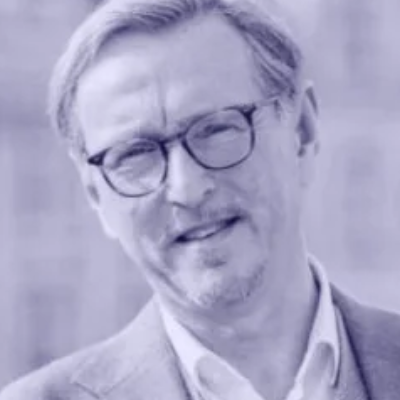
Peter de Caluwe, Artistic Director of the Salzburg Festival
Salzburg – A Compass for the Future
Salzburg, 18 September 2026
Allow me to say, first of all, how deeply moved I am by the responsibility I am about to take on. The Salzburg Festival has been part of my life for more than forty years.
I first came here as a student in the 1980s — and something entirely unexpected happened during that very first visit. I was standing outside the Großes Festspielhaus, simply watching the comings and goings, when an usher in livery approached me and placed a complimentary ticket in my hand.
And suddenly, there I was, seated in the first balcony: Mozart's The Marriage of Figaro, directed by Jean-Pierre Ponnelle and conducted by Gustav Kuhn — with José van Dam, Anna Tomowa-Sintow, Trudeliese Schmidt, Jane Berbié, Michel Sénéchal… All those artists whom, until then, I had known only from my recordings were suddenly there before me, on a stage. On this stage.
It was overwhelming. And it marked the beginning of a relationship with the Salzburg Festival that has never loosened its hold on me. I have returned here time and again — later as a dramaturg, then as a casting director, and eventually as an artistic director, but above all as a passionate member of the audience. As, I believe, are many of us here today.
For me, Salzburg has always been, and remains, a place where something extraordinary becomes possible: the highest artistic standards, and that unique encounter between music, opera and theatre.
That I should now, more than forty years after receiving that first complimentary ticket, be entrusted with a share of responsibility for the future of this Festival fills me with immense joy — and also with humility.
Humility in the face of its history, its artistic traditions, and the people who have shaped the Festival and who continue to sustain it today. And perhaps that is precisely why any consideration of its future should begin with a look at its origins.
I have always been deeply inspired by the founding vision of Hugo von Hofmannsthal and Max Reinhardt. The Festival emerged in the aftermath of the catastrophe of the First World War, not simply out of a desire to create an exceptional place for the arts.
At its heart lay a European and humanistic ideal: to bring people together through the power of art, and to create a space for encounters across borders. For me, this is no mere historical footnote. Quite the contrary. Some of the questions we face have changed, but that founding idea has lost none of its force.
It touches on something that has also shaped my own professional journey: my commitment to Europe.
I have spent my professional life working in different European contexts, most of the time, of course, in Brussels, the capital of Europe. For me, Europe is far more than a political or economic project.
It is, above all, a cultural project: a space shaped by different languages, histories, traditions and ways of looking at the world.
That is why the Salzburg Festival is, to my mind, not only one of the most important festivals in the world. Salzburg is also a profoundly European place.
And in a democracy, we need precisely such places: places where different perspectives can be expressed, where dissent is possible, and where we can learn to see the world through someone else's eyes.
Art cannot, and should not, offer simple political answers. But it can ask questions. It can encourage us to reflect on how we wish to live together — as human beings, as a society and as Europeans.
And this brings me to my compass, which is actually quite simple: the highest artistic standards and the greatest possible openness. I am not coming to Salzburg with a ready-made programme in my pocket. First, I want to listen. To the artists, to the people who work here, to the audience, to the city and to the province of Salzburg. And, together with the team, to understand what we must preserve — and where we might discover new possibilities.
I believe in culture as a force for emancipation and change. I believe that art can do more than move people: it can bring them into a relationship with one another.
For me, therefore, artistic excellence must never mean exclusivity. Salzburg must remain a place where the outstanding artists of our time want to work, and where exceptional artistic experiences can come into being. I have no intention of compromising on that ambition.
But precisely because art is created here at the very highest level, we should ask ourselves: how can we enable as many people as possible to experience something of that energy?
Not by simplifying art or lowering our standards, but by opening up new ways of engaging with it, and inviting people to embrace experiences that may initially seem unfamiliar to them.
I want a Festival where as many people as possible can feel: this extraordinary place has something to do with me, too, and with the world I live in. And here I see an exceptional opportunity in the years ahead.
The renovation works and the changes it entails will place considerable organisational demands on us. But I do not want to regard this period merely as a time of restrictions. It can also become an artistic adventure.
If we have to leave our familiar venues for a while, we will discover other spaces — in places where people might never previously have expected to encounter the Salzburg Festival. We can experiment with new forms while reconsidering what a festival can be in the twenty-first century.
Not as a substitute for the grandeur, the extraordinary achievements and the festive spirit that define Salzburg, but as an expansion of its horizons.
I am less interested in an artistic directorship defined by a handful of great names than in a Festival where strong artistic personalities enter into dialogue with one another. Different generations, different aesthetic languages, different art forms. I am particularly interested in what can emerge between genres.
When music encounters theatre, dance encounters opera, literature encounters the concert stage; when visual art, film or new technologies become part of an artistic narrative. Such hybridity can give rise to forms for which we may not yet even have names.
Opera, drama and concerts should each retain their own identity and distinctive artistic power — but they need not exist as separate worlds. The most exciting moments often occur where boundaries become permeable.
What matters to me is that the different disciplines and productions should not simply exist alongside one another. A festival needs a dramaturgy that extends beyond the individual performance: the different art forms should respond to one another, create contrasts and open up different perspectives.
It is this underlying dramaturgy that transforms a series of outstanding performances into a genuine festival programme. That requires curiosity. It requires trust. And it requires collaboration.
That is why I am particularly looking forward to shaping this future together with the people who work here. The Salzburg Festival is never the achievement of a single individual. It thrives on the knowledge, experience and passion of many people.
I see my task as listening, encouraging people to take responsibility, nurturing talent — while also having the courage to make decisions myself.
My greatest interest lies in people, not in systems: in the artists, in those who work alongside them, and in the audiences for whom this art is created. What interests me is what they can make possible for one another — and how, together, they can create something that none of them could achieve alone.
So, if you ask me how I envisage the future of the Salzburg Festival, I find myself returning to where I began: I want a Festival that trusts in its history and, precisely for that reason, is not afraid of the future. A Festival deeply rooted in Salzburg, European in spirit and open to the world. A Festival that preserves its highest artistic ambitions while remaining ready to explore new paths.
And perhaps, for me personally, this also brings the story full circle. More than forty years ago, I stood as a student outside the Großes Festspielhaus — and someone quite unexpectedly opened a door for me.
Today, I consider it an immense privilege to be able to contribute, together with so many others, to ensuring that the Salzburg Festival continues to open such doors in the future.
I look forward to that very much.
Originally delivered at the press conference announcing Peter de Caluwe’s appointment as the next Artistic Director of the Salzburg Festival, on 18 September 2026.
