Dorian Koçi
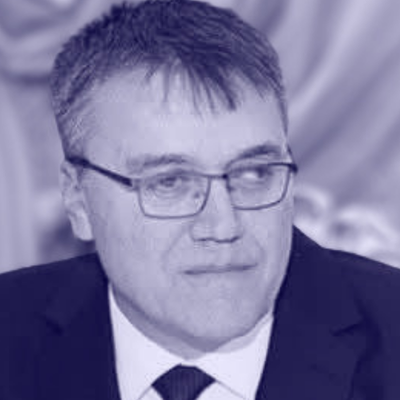
Dorian Koçi, Historian & Diplomat
Europe beyond politics
Why culture remains the foundation of the European project
Today, Europe is often perceived primarily as an economic and political union. Public debate revolves around markets, regulations, security, migration, energy, and institutional reform. Yet this contemporary image risks obscuring a fundamental historical truth: Europe was a cultural project long before it became a political one.
The origins of European unity lie not in treaties but in the Renaissance and Humanism, when ideas travelled more freely than armies and scholars built intellectual networks that transcended kingdoms, languages, and confessions. The Europe of Erasmus, Petrarch, Leonardo da Vinci, Copernicus, and later the Enlightenment philosophers was not united by common institutions but by a shared belief that knowledge, dialogue, and human dignity could transform society.
Perhaps the most fascinating aspect of this history is the constant dialogue between Europe's great centres and its so-called peripheries. Florence influenced Dubrovnik; Venice exchanged ideas with the Adriatic and the Balkans; Prague became a crossroads between Central and Eastern Europe; the Mediterranean connected Italy, Albania, Greece, and the Levant. The peripheries were never passive recipients of European culture. They enriched Europe with their own intellectual traditions, artistic expressions, and historical experiences. Europe advanced precisely because ideas circulated continuously between centre and periphery.
This interaction can be clearly observed along the eastern shores of the Adriatic. During the late fourteenth and throughout the fifteenth century, the Eastern Adriatic became home to a remarkable humanist movement that developed in close dialogue with the broader European Renaissance. Humanists across Europe embraced a vision of Europe not merely as a geographical space but as a moral and cultural community. Their intellectual networks extended well beyond Italy and France, reaching Poland, Transylvania, Hungary, and even England. They translated texts, exchanged manuscripts, corresponded across borders, and contributed to what we would today call a truly European intellectual space. This early Humanism reminds us that the European idea was never confined to a single political centre. It emerged through circulation, encounter, and exchange. The so-called "peripheries" were often active laboratories of European civilisation.
A similar dynamic of cultural return and renewal unfolded centuries later with the Balkan Enlightenment in the eighteenth century. More than an intellectual fashion, it was an ideological, philological, linguistic, cultural, and philosophical movement through which Balkan elites introduced the values of the French Enlightenment into the region. Its significance extended far beyond literature or philosophy. It represented the intellectual return of the Balkans to Europe—first through ideas and educational reform, and later through the creation of modern nation-states grounded in constitutionalism, civic consciousness, and European political thought. Long before political integration became possible, cultural integration had already begun.
From these historical experiences emerged one of Europe's greatest achievements: the concept of the civitas. More than a city, the civitas represented a community governed by shared values, civic responsibility, participation, and respect for the common good. It gave birth to the idea of the citizen—not merely a subject of authority, but an active participant in public life. This civic culture, in turn, has long found its most eloquent defenders in the arts. Artists rarely write legislation, yet they profoundly influence the cultural imagination within which political decisions are made. Throughout history, literature, painting, music, theatre, cinema, and museums have questioned injustice, challenged authoritarianism, and inspired reconciliation. The European project itself owes as much to writers, philosophers, historians, and artists as it does to statesmen.
Culture is therefore not an ornament of European integration; it is one of its foundations. Those working in the arts bear a particular responsibility—not to provide political programmes, but to preserve humanity within public life. Economic development and technological innovation alone cannot sustain democratic societies. Europe also requires imagination, ethical reflection, and historical consciousness. Artists remind us that prosperity without culture risks becoming merely material success, while democracy without memory becomes vulnerable to manipulation.
This truth is embodied most vividly in Europe's cities. Long before nation-states emerged, cities were laboratories of European civilisation. Venice, Prague, Kraków, Florence, Dubrovnik, and countless others became places where merchants, scholars, diplomats, and artists exchanged ideas across borders. Their architecture, museums, libraries, theatres, and universities continue to embody Europe's shared heritage. Cities remain among the strongest engines of European togetherness because they cultivate everyday encounters with diversity. A city that values its own heritage is generally more capable of appreciating the heritage of others. Urban cultural policies, heritage conservation, and international cooperation transform cities into ambassadors of European values.
The same connective power extends to local festivals. Too often, local traditions are perceived as isolated cultural events. In reality, every festival represents one fragment of Europe's extraordinary cultural mosaic. Whether celebrating folklore, literature, music, theatre, or gastronomy, local festivals gain new relevance when they engage with broader European debates about democracy, sustainability, intercultural dialogue, and historical memory. Participation in European cultural networks does not dilute local identity; it amplifies it.
Contemporary examples illustrate this vitality. Initiatives such as the European Capital of Culture programme, or cross-border projects like those involving Tirana and other Adriatic cities in recent years, demonstrate how festivals and collaborative artistic endeavours continue to bridge histories and foster dialogue in the present day.
This raises an essential question: Is Europe truly our community?
Europe is undoubtedly more than a geographical space. It is a community built upon shared values developed over centuries: human dignity, freedom, the rule of law, civic participation, and respect for cultural diversity. European identity does not replace national identity. Rather, it allows different histories and traditions to coexist within a broader framework of mutual respect. Albanians, Czechs, Italians, Portuguese, Finns, and Greeks remain deeply attached to their national cultures while contributing to a common European civilisation.
Nevertheless, history also teaches us that politics has often attempted to dominate culture. The twentieth century demonstrated how totalitarian regimes transformed art into an instrument of ideology. Under fascism and communism alike, literature, museums, cinema, and education became tools of political control. Today, similar risks persist in subtler forms. Rising populism seeks to instrumentalise heritage for exclusionary narratives, while digital fragmentation and algorithmic echo chambers threaten the very possibility of shared cultural conversation and critical reflection.
The arts flourish only where intellectual independence is protected. Museums, archives, libraries, universities, and artistic institutions should remain places where multiple perspectives coexist and difficult historical questions can be openly explored. They are essential pillars of democratic resilience because they preserve the capacity of societies to reflect critically on themselves.
In this context, arts festivals possess a significance that extends far beyond entertainment. They create spaces where politicians, artists, scholars, and citizens meet outside the constraints of formal institutions. Festivals encourage listening as much as speaking. They expose political leaders to human stories that statistics cannot capture and to historical experiences that policy papers rarely convey. Art cultivates empathy, and empathy remains one of the most necessary qualities in political leadership. A concert, an exhibition, a theatrical performance, or a historical commemoration may not change legislation overnight, but they can transform perceptions—and lasting political change often begins with a change in perception.
As both a historian and a diplomat, I have become increasingly convinced that Europe's future will depend not only on stronger institutions but also on stronger cultural bonds. Economic integration may create prosperity, and political cooperation may provide stability, but neither can endure without a shared sense of belonging.
That sense of belonging is created through memory, education, heritage, and dialogue. If diplomacy builds bridges between states, culture builds bridges between societies. Those bridges are often less visible than treaties, yet they are more durable because they are rooted in trust rather than negotiation. Europe was born as a civilis
ation before it became a union. Its first architects were not politicians but scholars, artists, humanists, and cities that believed ideas could travel farther than borders. Its future will depend on remembering that truth. Only by placing culture once again at the heart of the European project—while vigilantly guarding it against fragmentation and politicisation—can Europe remain not merely a successful political construction, but a genuine community of citizens—a modern civitas where diversity, creativity, and shared values continue to shape a common future.
Keynote Address delivered at the International Literary Festival for Young Writers "Tirana-Gate 2021", in the section titled "At the edge of Europe? A Discussion on the relationship between Europe's centre and its periphery." The festival was organised by the Institute of Books and Promotion as part of the regional READ (Regional Network for Cultural Diversity) project, supported by the European Union, the Ministry of Culture of Albania, and the National Historical Museum.
_
Dr Dorian Koçi is a historian, public intellectual, and diplomat. Former Director of the National Historical Museum of Albania (2017–2023). His research focuses on Southeast European interconnected histories, cultural heritage, memory politics, museology, and the Balkans’ contribution to European civilisation. He has lectured on world history, art history, and international relations, and actively contributes to regional initiatives promoting multiperspectivity and cultural diplomacy.
