Elena Polivsteva
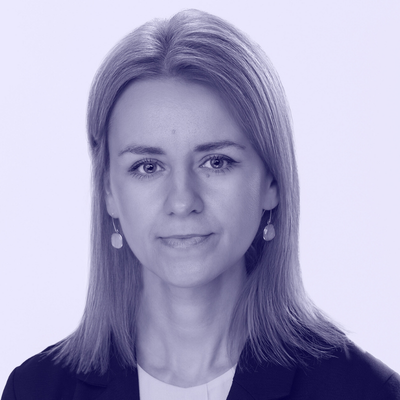
Elena Polivtseva, Researcher & Co-founder of Culture Policy Room
Artistic Freedom in Europe: New Law Alone Won’t Make Arts Free
What role do artists play in defending freedom in today’s Europe - and what about their own freedom? While political institutions speak with growing urgency about reimagining the EU’s autonomy and independence in the world, the conditions that allow artists to shape this new vision are quietly eroding. So too is their capacity to exercise freedom. A European Artistic Freedom Act is urgently needed - but no law, on its own, can secure the space where freedom becomes real and for everyone. Much more must be done - by more than policy-makers alone - and time is running out.
‘Honesty about the world as it is’
‘Time is running out’. Indeed, over the last few years, we have lived in what feels like a permanent urgency. Crisis after crisis has trained us to think and to govern in the language and logic of emergency and responsiveness.
The discourse of a decisive moment, of choice, of a crossroads, has penetrated political debate at multiple levels in recent years. We are told that we must choose, now or never, as hesitation itself has become a risk. ‘The world is at a crossroads’ was one of the central messages of the United Nations’ Summit of the Future, which UN Secretary-General António Guterres described as ‘the moment for world leaders to make breakthrough choices’. The political guidelines of European Commission President Ursula von der Leyen are titled Europe’s Choice, presenting a series of alternatives: to remain dependent or to be bold, to ignore reality or to be ‘clear-eyed about the world’, and more.
Beneath this urgency and rhetoric of choice, the appeal to clear-eyedness reflects another emerging trend in political debate: a growing collective realisation that many systems, including international institutions, have not been functioning as we trusted them to, and that pretending otherwise has come at a cost.
The recent Davos speech by Canadian Prime Minister Mark Carney resonated widely, perhaps because its central appeal addressed what many miss in today’s politics - honesty. About how power works, about what is broken, and about who pays the price. Carney called on leaders to ‘take on the world as it is, not wait around for the world we wish it to be’. He also spoke of the need to stop pretending that old systems still function and of the courage required to stand up for values in a world that increasingly rewards cynicism. ‘The power of the less powerful starts with honesty’, he argued. ‘This rupture calls for more than adaptation. It calls for honesty about the world as it is’.
Honesty is inseparable from courage, and courage is inseparable from freedom. Across Europe today, freedom has returned as a central political concept. We hear calls for independence, self-determination, strategic autonomy - not only rhetorically, but through new strategies and agendas. Teresa Ribera, First Executive Vice-President of the European Commission for a Clean, Just, and Competitive Transition, has spoken of transforming the Green Deal into a ‘Freedom Deal’, pointing to the need for Europe’s economic independence. The Commission President’s 2025 State of the Union address was framed as ‘Europe’s Independence Moment’, the same title as of the Commission Work Programme for 2026. Freedom and independence in the State of the Union speech resonated even more strongly than economic competitiveness, accompanied by a call to reimagine a united Europe as autonomous and strong, grounded in consolidated values such as democracy and freedom of expression.
In this sense, the crossroads moment appears resolved. The choice has been made: toward honesty; emancipation; autonomy; independence - in its various forms, from military to economic and technological; and freedom.
But if we speak about honesty and independence at the level of states and institutions, what about citizens? What about artists - those whose role is precisely to imagine, question, disturb, and expand the space of freedom? Because this renewed political language of freedom is unfolding against a troubling backdrop.
Freedom for artists?
The Global Expression Report 2025 shows that more than two-thirds of the world’s population now enjoys less freedom of expression than a decade ago. The Economist Intelligence Unit finds democracy in decline: its Democracy Index 2024 traces a persistent backsliding that began around 2007, with the years since the COVID-19 pandemic marking an especially sharp rollback of freedoms.
Statements that ‘democracy is under threat’ are common in EU political speeches and official documents. Meanwhile, European citizens are not very satisfied with the state of democracy either: as the Flash Eurobarometer 522 Democracy (2023) revealed, more than half of EU citizens surveyed (51%) are dissatisfied with the way democracy works in their country.
Artistic freedom is not immune to these broader trends. A recent study by the Performing Arts Coalition (PAC) - Beyond Rhetoric and Reality: Cultural Rights, Artistic Freedom, and Democratic Resilience - confirms what organisations such as Freemuse have documented for years: artistic expression is under increasing pressure, not only globally but also across Europe, including in countries where freedoms were once considered secure.
Nearly half of the survey’s respondents - 261 performing arts professionals, mostly based in Europe - regard artistic freedom as endangered. One third report having experienced government censorship in the recent past, sometimes through direct bans but more often through subtler mechanisms such as funding cuts, shifting priorities, or procedural exclusions.
Many described a landscape in which the most critical, experimental, or politically challenging voices are quietly pushed out — not necessarily through prohibition, but through administrative complexity, opaque criteria, or chronic underfunding.
Culture called to rescue democracy
At the same time, as democratic erosion becomes more widely acknowledged, the role of culture in responding to it has steadily risen on the EU policy agenda. This shift culminated in the joint document - the Declaration on the Necessity of Culture and Media as a Safeguard for European Democracies, signed by nearly all EU member states (except for Hungary), and joined by Iceland, Norway, Switzerland, the United Kingdom, and Ukraine, in late 2025. The declaration presents culture, democracy, and security as an interlinked triangle: Europe’s security depends on democratic resilience; and heritage and cultural diversity form an essential part of it.
The newly adopted Commission’s strategy for culture - the Culture Compass for Europe - identifies artistic freedom as a priority, recognises culture’s democratic function, and connects it to the European Democracy Shield, the EU’s new democracy strategy. Notably, the Democracy Shield is one of the few, and perhaps the only, EU policy documents outside the cultural field that recognises, even if briefly, artistic freedom as a pillar of democracy.
A key EU development in linking culture with democratic priorities is the Commission’s proposal to merge Creative Europe with the CERV Programme (Citizens, Equality, Rights and Values) within the next Multiannual Financial Framework (2028–2034), as part of a new funding programme, AgoraEU. The programme is framed largely around EU values and democratic resilience - which, according to the proposal text, are undermined by external and internal threats, highlighting culture’s importance for identity, participation, citizenship, equality, and non-discrimination.
The overall rhetoric of AgoraEU, focused on defending shared values against mounting threats, creates a strong sense of urgency: to withstand, protect, preserve, and safeguard what Europe considers central to its identity. While these calls are timely and justified, the guiding vision of a programme that supports not only rights defenders and wider civil society but also creativity and the arts appears to lack a more positive, innovative, and courageous outlook - one that emphasises imagining, inventing, and inspiring new futures, precisely the domains in which artists and creative workers excel.
Culture is undeniably fundamental to democracy and civic rights. Yet, in conflating culture with the defense of democracy within the same funding tool, and ending a standalone programme for culture, we may also be witnessing a deeper shift: a retreat from recognising culture’s imaginative and future-shaping potential within political thinking.
‘Negative’ freedom is not a destination
Could it be that the way the European Union currently frames the role of culture is symptomatic of its own perception of freedom? A Europe confident in its future would ask culture to imagine, provoke, invent, and take risks. Instead, culture is increasingly tasked with stabilising, preserving, and reassuring, as if the horizon were something to protect ourselves from rather than to move toward. This defensive framing of culture’s role is, in many ways, the clearest manifestation of Europe’s struggle with what historian Timothy Snyder calls ‘positive freedom’: a vision of not only what Europe wants to be free from, but what it wants to be free to become. When culture is reduced to a tool of cohesion and protection, its imaginative capacity is sidelined - and with it, societies’ ability to desire, to propose, and to project a future that is more than a guarded extension of the present.
This distinction matters because Europe today speaks the language of emancipation largely in negative terms: freedom from dependence - economic, military, technological; freedom from coercion; freedom from vulnerability. Today’s Europe knows what it does not want to be, what it does not want to depend on. This is what Snyder would call negative freedom - the removal of constraints, the absence of domination. While necessary, it is not in itself a destination. Societies must also develop positive freedom: the shared capacity to act, to choose a future, and to build institutions that express collective purpose. Negative freedom without a positive vision creates a vacuum, one that can easily be filled by cynicism, resentment, or authoritarian temptation.
Perhaps, then, the crossroads remains unresolved. The question is not whether Europe should claim its independence, but whether it has imagined what it seeks to become once free in a changing global reality.
Throughout history, positive freedom has been inspired and brought into being by creative and artistic minds. The arts have long been the space where freedom is imagined, debated, and enacted in lived experience.
“Europe struggles with what historian Timothy Snyder calls ‘positive freedom’: a vision of not only what Europe wants to be free from, but what it wants to be free to become. Europe today speaks the language of emancipation largely in negative terms.”
‘The audience needs to know that the artist is honest’
This brings us back to artistic freedom. Thirty-seven percent of respondents to the survey of the study by the Performing Arts Coalition told us they had self-censored in the recent past, and another thirty percent in one or another way acknowledge that this tendency exists within the broader peer arts community. According to the respondents’ testimonials, most often, self-censorship happens in relation to funding: language is adjusted; names are removed; ideas are reframed; risky concepts are softened. Projects are not abandoned because they lack value, but because they lack safety. In some countries, respondents spoke of the need to maintain a ‘good profile’ with funders: to avoid criticism, to stay agreeable, to not disturb.
This does not always mean silencing oneself completely, but it does mean that imagining the reaction of conservative audiences, political actors, or administrators has become part of the creative process itself. Social polarisation has also become a significant factor of self-censorship. Polarised societies are characterised not only by hostility between ideological camps, but by shrinking tolerance for disagreement within them. Controversy becomes risky and complexity unwelcome - conditions that are at odds with artistic expression.
Self-censorship has for some time been discussed in the cultural sector as a coping mechanism. As the Freemuse Report 2025 notes, in some contexts, censorship itself may no longer need to occur on a large scale when artists begin to censor themselves as a matter of survival.
Self-censorship is damaging not only for artists, organisations and their creative processes, but also for societies. I discussed self-censorship in the Western context with Sverre Pedersen, Freemuse Director, earlier this month. He reflected:
“When we are self-censoring ourselves, we are actually violating the role of the free arts in a society. The audience needs to know that the artist is honest. When the audience realise that the artist is self-censoring because bread and butter is more important than actually the creation, the audience will lose their trust and confidence with the arts and the artist.”
So, is time running out?
Artistic freedom issues have been raised by the sector all across Europe in recent years, and EU policy-makers have listened to these concerns. The Culture Compass emphasises artistic freedom as one of its priorities. Yet it does not set out particularly bold solutions to strengthen it. It focuses instead on collecting cases and monitoring artistic freedom through the new State of Culture in the EU report. Although this is not sufficient on its own, such periodic documentation would still be a step forward, as no systematic EU-level monitoring of artistic freedom currently exists.
In the European Commission’s proposal for the AgoraEU regulation, artistic freedom is framed as a part of the objectives (which is not the case for the current Creative Europe programme), and there are tentative indications that access to EU funding could become conditional on respect for artistic freedom. The proposal states that implementation of the culture-specific objective must be carried out with “full respect for artistic freedom and the diversity of cultural expressions, while contributing to the improvement of working conditions for artists and cultural and creative professionals.”
More recently, the sector itself has mobilised around a proposal to adopt a European Artistic Freedom Act, drawing inspiration from the European Media Freedom Act. As the initiators define it, an Artistic Freedom Act would serve to secure “an environment in which artists and cultural workers can operate without fear of censorship or retaliation and contribute to a democratic, diverse, and resilient Europe.”
These initiatives suggest that artistic freedom is finally entering the centre of European political attention. What matters now is whether the conditions for genuine artistic freedom can be secured in practice, not only in principle. This requires a closer look at the gaps that remain and the areas where decisive effort and attention are needed.
Artistic Freedom begins with who gets to speak at all
There is often a problem in how artistic freedom is understood, both within the sector and at the political level. Too often, it is defined as merely the absence of political repression. As long as no one is officially banned, arrested, or censored, freedom is assumed to exist. Governments can then wash their hands of the issue and regard it as not their problem.
Yet in systems marked by precarity, defunding, market dominance, unregulated digitalisation, and eroding cultural infrastructure, many voices never reach the point of being censored. Some artists never have the conditions necessary to speak in the first place. Some communities never gain access to cultural spaces or to artistic education. Some practices never become visible enough to be suppressed. Defending only the freedom of those who already have a voice offers, at best, a partial response.
A holistic approach to artistic freedom, one that includes but goes beyond a narrow focus on direct government censorship, must also consider the cultural rights of the population, as well as social dynamics and the behaviour of digital platforms. Although the term ‘holistic’ is overused and often impractical, this is a call for a practical strategy. It concerns where we place our attention: what we measure when assessing the state of artistic freedom, which cases we collect, which indicators we develop, and, ultimately, where we seek solutions. Alongside monitoring censorship by governments and audiences - undoubtedly a growing and serious threat - we should also develop and refine methodologies to map access to artistic expression: how and for whom it exists through education, funding, and visibility platforms, and for whom it does not.
“Defending only the freedom of those who already have a voice offers, at best, a partial response.”
Self-censorship: We can’t fix what we don’t understand
We must also establish and strengthen methodologies for monitoring self-censorship, a concept whose definition remains rather vague both among artists and within policymaking. One step is to ask artists about their experiences of self-censorship; another is to ensure a shared understanding of what the term means. For example, some consider adjusting the vocabulary of project applications to fit funders’ requirements a form of self-censorship, while others argue that it is not, and that such adaptation has existed for as long as public funding for culture itself.
Self-censorship needs to be defined more clearly and continuously refined as we learn more about its contexts, forms, and lived realities, factors that themselves evolve and generate new pressures. Methodologies for measuring self-censorship must also be developed. In a conversation with Sverre Pedersen, Director of Freemuse, he explained:
“Self-censorship is hidden, and nobody is proud of censoring themselves. You don’t go to social media or the press and say, “I have to self-censor”. We are therefore totally dependent on creating safe spaces where people can share their experiences. When you create these safe rooms, you can gather a great deal of information on a personal level, which makes it possible to develop strategies to confront these threats.”
When we cannot clearly define a problem - and especially when we lack the tools to discuss it - we cannot solve it. Such safe spaces are therefore crucial today, not only within local communities but also across borders. Creating and maintaining them requires time and resources.
“Self-censorship is hidden, and nobody is proud of censoring themselves. You don’t go to social media or the press and say, ‘I have to self-censor’.”
— Sverre Pedersen, Freemuse Director
The role of the freedom act: More than labels, please
Freedom is collective, and its erosion in democratic societies ultimately produces negative ripple effects for freedoms in places already struggling to secure them. If the European Union describes itself as a ‘global leader in culture and creativity’ (citing the Culture Compass), one essential step it can take is to proactively recognise and strengthen artistic freedom, beginning with its own artists. What is needed is a consolidated EU-level approach to artistic freedom, designed, however, with great care.
A bold EU-level action on artistic freedom, such as a European Artistic Freedom Act, could strengthen recognition of artists as providers of truth and critical perspective in society. At the same time, it could reinforce their portrayal as opponents or enemies in authoritarian contexts. While acknowledging and promoting the critical role of artists is essential, it is equally important to move beyond symbolic recognition that offers no real protection and may unintentionally expose the arts sector to greater suspicion from anti-democratic actors.
“If the Freedom Act were to be tied to EU funding conditionality, how can we ensure that it does not restrict access to cultural support for artists and cultural organisations? ”
Any EU Act on artistic freedom must therefore be actionable and effective, going beyond the mere acknowledgement of a right for free expression that is already, in one form or another, constitutionally protected in all EU Member States. If such an act is to exist, it must be ambitious enough to introduce real mechanisms for protecting artists’ rights, addressing the many ways artistic freedom can be restricted, including government pressures - in all their forms, both obvious and subtle, but also threats by polarised societies and the growing trend of self-censorship.
What about linking respect for artistic freedom to funding? For example, Member States, in their compromise text on AgoraEU, are now pushing for alignment with the European Media Freedom Act as a condition for countries to participate in the future AgoraEU programme.
Access to programmes such as Creative Europe and the future AgoraEU is vital for many artists and cultural actors who fall outside the recognition or protection mechanisms of anti-democratic governments. If the Freedom Act were to be tied to EU funding conditionality, how can we ensure that it does not restrict access to cultural support for artists and cultural organisations? Conditionality should target those who limit freedom or are obliged to protect it but fail to do so—not those who suffer from its restriction.
Artistic Freedom is built, not given
A legal tool that seeks to expand freedom will inevitably encounter resistance, both blatant and subtle. This is the reality; otherwise, there would be no need to establish such an act in the first place. Thus, for such an Artistic Freedom Act to have a post-adoption life, it will ‘take a village’ to take care of it.
In the State of Culture Report 2024, we end the chapter on artistic freedom with a question: “Will there be a moment when we will need to unlearn self-censorship?”
So, when protection mechanisms are introduced, will artists actually use them? Will they be brave enough to enact freedom, not only receive it, in a context that, sadly, is not going to become more welcoming soon? How can we ensure that freedom becomes a genuine commitment, collectively cared for in full solidarity across borders?
I discussed this with Sverre Pedersen last month. He emphasised that a commitment to freedom requires both establishing the discourse around it and building capacity within the sector so that artists can exercise their rights. Sverre explained:
“Such an act alone will not solve the problem. It can, of course, have an impact, but the root problems must be tackled by artists and their associations. They need to prioritise strengthening artistic freedom and maintain an ongoing discourse about it. Both those of us working in human rights and artist associations must be brave enough to engage in difficult conversations about exercising freedom, about self-censorship. Here in Western Europe, there is a tendency to say, 'Our government must solve this for us.' But we are a society, and solutions must come from within it.”
As shown in the PAC study's survey responses, the arts field largely recognises that, in the current context, building collective resilience is crucial. Networks, solidarity and safety nets, spaces for dialogue and resource sharing, collective strategies for legal protection, tools for media and social media resistance, and community support are all crucial, especially for individual artists and small organisations. Once attacked or threatened, artists should not only be able to withstand these pressures but also be empowered to go on with their work without losing courage.
Resilience-building cannot happen at the fringe of the cultural sector’s activity; it requires active support from funders. If policy-makers genuinely aim to support a free arts sector, they should help build artistic freedom infrastructures - legal mechanisms, but also awareness, and courage muscles within the sector to consolidate and enact its values. Artists must be aware of their rights, able to exercise them without fear, and capable of pushing back against attacks, whether from governments, politicians, the media, or society at large, while continuing their work.
Societies also have a crucial role to play. Yes, audiences need to know that artists are honest. But are audiences ready to support artists in being honest? The discourse on freedom, therefore, should extend well beyond the arts sector, and audiences should become allies in paving the way for artistic freedom.
Towards a positive freedom for the arts - and for Europe
Timothy Snyder wrote in his book On Freedom: “Negative freedom also offers an easy dodge: once the barriers go down, all is permitted, and somehow all will be well. But this approach provides no definition of freedom and provides no sense of how a free person behaves.”
Freedom - of Europe and of artists - must be recognised and protected, but protection alone is not enough. Freedom also needs to be enacted, played out, hosted, exercised. Artists Freedom needs institutions, spaces, and practices willing to hold controversy, honesty, plurality. Are our cultural institutions ready to see themselves as spaces of freedom? Are they willing to resist market pressures, social antagonism, and peer surveillance? Are they prepared to engage with a broader crisis of honesty that political leaders are trying to address today? And are political leaders ready to recognise artists and the arts as allies to imagine and enact Europe’s freedom?
Let us end this essay with another of Snyder’s definitions of freedom: “Freedom is not a drama we watch. It is a play we write on a stage we build for an audience of everyone.”
First published on Culture Policy Room, 12.02.2026. See here.
