Milo Rau
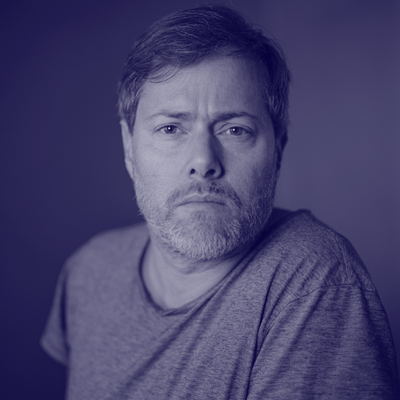
Milo Rau, Theatre Director & Artistic Director of Wiener Festwochen
©Marc Driessen
If culture wins, Europe wins
Why we need an European Artistic Freedom Act
“Europe is at war. It’s not about borders, it’s not about land – it’s about our way of life.” Glenn Micallef, European Commissioner for Intergenerational Fairness, Youth, Culture, and Sport, used these words at the European Festivals Association (EFA) roundtable. Micallef described Russia's ongoing invasion of Ukraine as “a deliberate, hybrid war on culture and identity,” warning that closing libraries, theatres, and museums today in the European Union is the clearest sign of surrender. And he concluded with the formula: “If culture wins – Europe wins.”
Indeed: It's not about borders and countries, it's about shared values. Let us remember: the European project is, at its core, based on the openness of the cultural life of the individual countries and their free co-operation. If these disappear, it loses its soul and meaning. And that is exactly what we are experiencing now: cultural expression has become a target of political control.
For the last 18 months we have been travelling around the world – mainly Europe, but also Asia and the US - with the RESISTANCE NOW TOGETHER campaign for artistic freedom. Wherever we went, from New York to Kyiv, from Oslo to Belgrade, from Bucharest to Avignon, we spoke with artists and representatives of cultural organisations about artistic freedom and listened to them. Because the core of the RESISTANCE NOW TOGETHER campaign is solidarity, and solidarity starts with exchange and understanding.
We understood that across Europe artistic freedom and institutional autonomy in the cultural sector are under threat; that we witness a marked deterioration in artistic freedom across several EU member states, with policies bringing cultural institutions under direct political control. This includes bureaucratic encroachment on cultural bodies, politicisation of arts funding, state media control, and restrictions on civil society.
All these budget cuts, the censorship, and ultimately the closure of cultural institutions in Europe, are following a similar pattern: a blueprint. That they are part of what we could call a European cultural war, a war waged by the enemies of open society and liberal democracy against freedom of art and freedom of expression. That is the war the Commissioner was talking about.
Let us give two concrete examples. The RESISTANCE NOW campaign began in response to the dismissal of Matej Drlička, the general director of the Slovak National Theatre, in August 2024 by the populist government of Prime Minister Fico. Fundamental rights, above all the right to freedom of art, were violated and the artistic institutions, supported by the Slovak civil society, answered with strikes that continue to this day. The same thing happened a year later, in 2025, but in an even more extreme form, when the director of the largest festival in Serbia, the BITEF, was dismissed and the new artistic director was stripped of the decision-making power over the festival’s programme – and the programme itself was censored. What happened at the BITEF Festival, the disinvitation of our piece “The Pelicot Trial” was the most damaging action against the freedom of art we have experienced in the last 20 years. Once again, there was no other solution than an uprising by actors of the civil society: the artistic directors resigned and the festival took place as a guerilla festival.
These are only two examples of the political and legal isolation of national cultural actors we experienced during the RESISTANCE NOW campaign. Europe and culture, they are two sides of the same coin. “If culture wins – Europe wins” is just as true as “If Europe wins – culture wins”. In her keynote for the opening the 2025 edition of the Salzburg Festival Anne Applebaum reminded us of historical examples from the past century, when on the one hand the Soviet Communist Party and on the other the Nazi Party “built totalitarian regimes, in which the ruling party controlled not only politics and economics, but also culture, art, education, and even leisure time.” Since then, Europe has reunited, but also Applebaum argues, that “civil society, free associations and the artistic freedom that they promote, the freedom we have taken for granted for two generations, are now threatened once again around the world, more so than at any point in my lifetime.” Applebaum emphasises how important it is that we participate in civic organisations that give us a sense of community, that democracy only prevails where we practice it. The same applies to Europe: it only exists where we stand up for European values and challenge them. The civic engagement we see in Slovakia, Serbia, but also in Georgia and Lithuania, where artistic freedom has come under massive pressure is a shining example to us in this regard.
With RESISTANCE NOW TOGETHER, we call on the EU to take action: While Article 10 of the European Convention on Human Rights provides protection for artistic expression and upholds pluralism as a core democratic value, we see a significant enforcement gap. Existing legal frameworks lack binding force, leaving artists and cultural institutions vulnerable to censorship, interference and discrimination. This is why we formed a coalition of cultural institutions, legal experts, networks, and activists to propose a model law - that we hope will inspire the Commission to take this forward and make a legislative proposal. The proposed European Artistic Freedom Act would establish a coherent EU-wide framework guaranteeing artistic freedom across member states. It would draw inspiration from the European Media Freedom Act, which offers similar legal protections and recognises the right to reliable information. Such legislation would safeguard the right of artists and cultural institutions to create and operate free from censorship and political interference.
“If culture wins, Europe wins.” We demand that the Commission follow up its strong words with strong actions that effectively protect artistic freedom. For this is what we learned on our trip: culture is not a matter for individual countries. Culture is at the heart of our democratic European values. Protecting artistic freedom is not only a cultural imperative, it is a democratic necessity.
Milo Rau & Judith Staudinger
