Hannes Swoboda
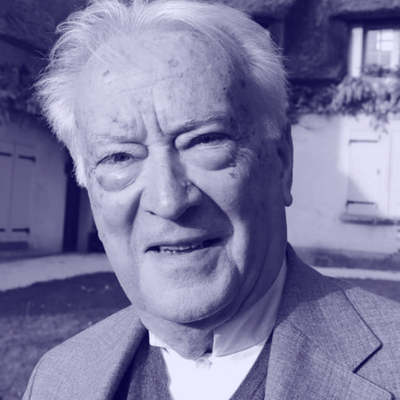
Hannes Swoboda, Former Member of the European Parliament
Europe, Culture, Technology and Citizens Belonging
The European Union, under its predecessor labels, started as an elitist project. It was started by a small group of courageous men who found it necessary and feasible to overcome the traditional competition between states, their governments and military forces. One of them has been Jean Monnet, in whose house - or rather in a guesthouse adjacent to his house - I participated recently in a discussion about how culture could contribute to a Europe belonging to its citizens. I was invited to address the meeting and debate with the engaged participants as a founding member of the initiative “A Soul for Europe”. When I was still member of the Vienna City Government I was invited by my former Berlin colleague, the Senator for Urban Development, Volker Hassemer, to join this initiative. I am happy that it is still alive and attracting new activists from all over Europe, Türkiye included.
European Union and the cultural reconstruction
After two devastating World Wars, both starting in Europe, forward looking men like Jean Monnet worked to convince political leaders to try a new start. The idea was highly political, but the mechanisms of overcoming war and racism were predominantly economic, because economic connections and ties - especially concerning the resources needed for armaments - should prevent the outbreak of new wars. In course of the development of the new Europe, economics became the main driving force and got more and more a life of its own - until the conflicts and wars in Europe’s South East, the changing global order, but also the climate change enforced a much broader agenda on the European Union. Culture played a minor role in the European unification process. On the one hand the economic reconstruction and the construction of a welfare state had priority. On the other hand, the necessity of the cultural reconstruction was quite different in countries with a fascist background in comparison to countries which could sustain their democratic basis even in times of war. In communist countries this reconstruction came basically visible only after the breakdown of Communist rule. But already during these authoritarian regimes - and especially after the Helsinki Conference of 1975 - cultural reconstruction had taken place and took on the character of dissidence against the authoritarian/dictatorial regimes.
Culture gets more prominence
Parallel to these developments, and especially due to active members in the European Parliament, culture - including education - became an increasingly important feature of the European integration process. The European Commission aligned itself to the new development. This was especially expressed by EU Commission President Manuel Barroso at the first of the A Soul for Europe Berlin Conferences in 2004. But how can and should we define culture when we are discussing its possible contribution to the European project? Culture - and especially the arts like films, theatre performances, novels, visual arts, community projects - should not be forced to take the one or other form of expression. Art must be free to limit itself to bringing enjoyment and pleasure to people. But in relation to our subject, we should use a definition of culture as a generally open-minded, often ambivalent, extravagant and even provocative contribution to forming and transforming society. Culture is in this respect closely linked to the arts and we should be aware, that it is also an elitist project. Even though it has an elitist background, it can be presented and used to win the attention and support of a wider public and by this have an important political effect.
Cancel Culture versus regressive culture
In this connection one has also to mention the Cancel Culture movement which is extremely elitist in that it limits cultural expressions, often indiscriminately. It is anti-culture, as culture may challenge certain approaches and attitudes, but should never develop a forbidding mood. Not surprisingly the Cancel Culture movement and their activities have been used - or rather misused - by reactionary political forces to promote their backward looking, nationalist cultural attitudes in opposition to the Cancel Culture movement. They are promoting and where possible implementing the “real” culture representing the “people’s values” and are actively discriminating against international arts. In this they are involuntary partners of the Cancel Culture movement.
As Sheri Berman and John Guida wrote in an opinion article in the New York Times International Edition on 21.4.2026 both movements make public authorities moral arbiters. “Making government the arbiter of how people should lead their lives, what the ends or goals of that life should be, what the definition of the “good” is - this is fundamentally incompatible with pluralistic democracy…..it is important that we recognise that trying to impose all of our values on our fellow citizens is a dangerous path to go down.” It is not about refraining from moral judgements, but they should brought into a sincere dialogue, not be just imposed on people.
Even if some of the radical liberal left and the radical right have similarly censorious attitudes, it is interesting to note that, for the anti-European and populist forces, cultural issues play often a more prominent role in their programmes than for parties of the centre. Culture is an instrument used to fight against liberal political and cultural groups and especially against the project of the “transnational” European Union. In opposition to Trumps's slogan “America first” they are not proposing “Europe first” but “Germany first”, “Spain first” etc. Until Trump started the war against Iran some of those forces were even inclined to accept Trump and his policies as the main authority to follow.
Cultural heritage and national identity
Coming back to an open and tolerant concept of culture and the arts we should perceive the European cultural heritage as part of that defined culture. The condition should be that it is presented as embeded in the society - and its challenges, contradictions and conflicts in the times the heritage was originally created; also the later changes and redefinitions presented in their historical context. In dealing with European heritage we should never only look back by seeing it isolated from past, present and future societies and their specific characteristics.
Max Hollein, the CEO of the Metropolitan Museum of Art, underlined in an interview with the Financial Times on 20.4.2026 the mission of his museum to explore the “context in which art was made, how its meaning may have changed over time and how it can be read in today’s world” and that without a singular “national identity”. Anyway the reference to the different “national identities” leads mostly into a world of fantasy. “National identity” was formed over the centuries by multiple influences from different areas in and beyond Europe. Furthermore every individual has several identities.
The European Capitals of Culture could do more in pointing out this aspect. Too often cultural heritage is presented in its local historical connection without showing how European influences definined local societies, customs and buildings over many centuries. That should be the main purpose of naming certain cities as European Capital of Culture. In view of the simple-minded and fake interpretation of national culture it is necessary to demonstrate the different European and even non-European roots of present day local and national culture, including its predominant language.
Citizens and their national environment
Contrary to the European project the majority of citizens during all these years of construction and reconstruction were embedded in national environments. This makes sense, as democracy works best when people have direct contact to political actors, or at least when there is strong visibility of these politicians and their actions. But societies and their composition are changing. We must take into account that migration is leading to additional challenges. Migrants are often also embedded in their original national environment. And often they cannot use the basic instrument of democracy, voting in their new country of residence. The dramatic, even peaceful, changes due to technological innovations, new social media and - as just mentioned - increased migration, specially of non-Europeans into European countries, has created feelings of uneasiness and anxiety amidst the local population. And exactly these sentiments were and are used by nationalist forces against Europe against free and open-minded culture. Under these circumstances culture must be particularly active in showing the importance of the European way of life - achieved after and by many ideological and cultural struggles. This European culture has of course its different modes and national, regional and local particularities. Europe must respect these particularities. Nevertheless there are some basic values underlying the different modes of culture and ways of life and these must be the integrating factor for immigrants. At the same time the many links to the outside world - outside European borders - must be underlined. As Martin Pucher writes in his famous book, Culture - a New World History, “Culture… is made not only from the resources of one community but also from encounters with other cultures. It is forged not only from the lived experience of individuals but also from borrowed forms and ideas that help individuals understand and articulate their experience in new ways.“ This outward looking attitude in addition to respect for national culture also facilitates the integration of immigrants.
It is important to give Europe’s citizens the opportunity to feel themselves as part of a longterm, continuing development which led to the present status of European culture. An example of the necessary approach to achieve that aim - in this case for India - is shown at an exhibition of the CSMVS Museum in Mumbai. They try to show how the past is co-deciding the present and the future. The purpose of this exhibition is also to demonstrate how global developments and contacts are influencing national and local cultures, including local customs and languages. To act, and especially to trade, globally is nothing new, even if the forms and content have changed.
Citizens oriented cultural policies
Culture in general should do more to connect. It needs to connect on a national level, between different national levels of different countries, to enhance a common European understanding of and approach towards national cultures. And it needs to underline that European culture has always had, and will always have, links to the non-European world as it has with trade. Culture should help people to find how they belong to the community in which they are living without supporting a narrow minded, nationalistic mindset. Culture should also try(!) to overcome or at least to reduce the polarisation in our societies. Culture often has more opportunities to build such bridges than politics.
Culture should never give up its human and progressive orientation but not every cultural war is helping to bring progress into society and not every cultural war started by opponents of openness and avant-garde - for example about gender - should be taken up by cultural activists by promoting the exact opposite. Of course it must be accepted when some artists are happy about the confrontational and divisive effect of their presentation. But we should be aware that this does not contribute to people’s belonging to a common Europe. I am not appealing to appeasement and acquiescence but to a more pragmatic approach. In this respect pragmatic means culture should contribute to tolerance and inclusion and should not give certain groups of citizens the feeling, that they are excluded and dehumanised. Culture could help people to accept ambivalence and uncertainties and this acceptance can lead to more tolerance of democratic processes - in contrast to authoritarian decisions by the “Great Leader”! As mentioned above, these leaders are aware of the importance of culture for their political purposes. They want to create an unquestioned belonging to their political movement and to themselves personally and they know that culture can have a special glue effect to achieve this.
In this respect we need to underline how important it is to oppose and counter the way the authoritarian the leaders of US and Russia are misusing their backward looking 'cultural' approach as an aggressive instrument, and turn instead to a European approach. This must lead to a European patriotism - complementary to the different national patriotisms. But patriotism must not be mixed with nationalism. Culture must help European citizens feel at home in Europe - in spite of global influences, in spite of - hopefully controlled and well managed - migration from all over the world and in spite of permanently newly developed technologies. Culture must stay revolutionary but at the same time help and encourage citizens to digest the different political, economic and technological revolutions with which we are confronted. As Sheri Berman and John Guida underline in their above mentioned opinion article, citizens often have no “mainstream center-left and center-right party acknowledging or responding” to their concerns. The arts cannot substitute political parties but they could take up these concerns and deal with them in an exciting, sophisticated but also understandable way.
Culture and the New World
Probably the biggest challenge is how to win over the many young people who prefer to use Tik Tok and similar media for information and communication. How could they be brought back into the cultural world? Maybe it is too arrogant to exclude Tik Tok from the cultural world. But we live in times in which we are more confronted with the problematic impacts of social media and its algorithms and especially of artificial intelligence and chatbots as a substitute for human beings. Yes, we need to teach people how to use AI efficiently, but we should also teach them how to use AI critically. By the way, the New World is a product of a small elite, predominantly developed in Silicon Valley and later on in China. But it is - because of its personal usefulness -infiltrating our everyday life more in comparison with other elitist projects. In opposition, or at least complementary, to technological skills we have to underline how culture, its creativity and its non-functionality, is important for preventing subordination under technologies and algorithms. Europe especially must not refrain from developing a different model of how to integrate technologies into our life. The uncritical subordination of human beings is never good in human relations and not at all acceptable in human-technology relations. Culture may present and underline the real world in opposition and complementary to the virtual world, which will without doubt in future play a bigger role in forming our societies.
Conclusion
The European Union - which is standing here for Europe as its core - is constantly confronted with new challenges from within and without. Culture is changing in its mode of production and presentation. And the same is true for European populations in the framework of its different nations. To connect these different actors amidst these permanent changes is a difficult task.
The multiple uncertainties the European citizens are confronted with push them to look for certainties and some sort of stability. This they recognise often only in the past. The reconstruction of the glory of the national past is promised to them by extreme right wing movements and parties. They promise a return to the original 'pure' population composition and its language, expressions, religion, traditional values (including clear sexual orientation and definitions). Culture can challenge and unmask these fake and ideologically motivated promises. But it needs special effort, without a lecturing attitude, to counter the backward looking mindset which hopes for a return of the 'good old days'.
The cultural sector has a role of its own to play in European politics. But on the other hand it should be closely connected to other areas of European effort. Environmental and climate policies are some of the fields where art can contribute enormously to the understanding of the needs of the natural world. The new technologies have been mentioned above. Culture can use the new technologies to spread its messages but also to demonstrate the dangers of its uncritical use.
Defence - which is certainly a contested area of European politics among artists - is closely connected with culture. European defence is not organised to acquire new territories in resources and people. If we help the Ukrainian people to defend themselves against Putin’s aggression it is about defending its peoples, its culture and European values. We defend the rights of a European people to chose its language, religion and the right to be proud of its heritage, including its literature. In this respect Europe must be vigilant not to mix the defence of Ukraine and its people with a policy of discrimination against Russian people, its artists and its cultures.
Europe should defend Europe’s values against a regime which has not only started a cruel war against Ukraine but developed an ideologically based hybrid war against Europe. Russia’s music, literature and visual arts are part of Europe’s culture - even those parts which were denying the right of the Ukrainian people for their own statehood. We find such an ambivalence all too often in European literature in support of colonialism and extreme nationalism. All this should be critically evaluated. But we must unequivocally reject the aggressive propaganda which is today justifying a war and is brutally challenging and endangering peace on the European continent. This rejection of authoritarian propaganda is the basis of the European Union. Culture is diverse and sometimes ambivalent but must never spread propaganda aggressively and call for violence.
