Wim Wenders
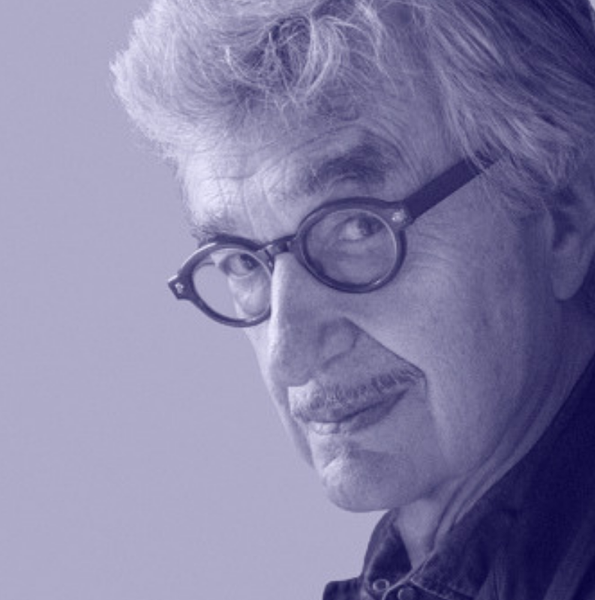
Wim Wenders, Screenwriter, Director, Producer, Photographer & Author
©Donata Wenders
THE IMAGE OF EUROPE - Identification and Representation
Discourse on Europe
Brussels, 11 June 2007
Mr. José Manuel Barroso, President of the European Commission,
Mr. Dimitriadis,
Esteemed Members of the European Parliament,
Ladies and Gentlemen,
The series of events of which my talk today forms part bears the title: “A Soul for Europe”. It is a programmatic title, requiring, demanding or encouraging, with the inverse implication – or perhaps it's more a suspicion? – that Europe lacks such a soul. It would also seem to suggest that what is missing is a vision of the future and a still active dream. If that is the case, we must do something about it! WE? “The Europeans”? Or THEY? “The policymakers”? This is one of the issues I shall address in the course of my talk.
My contribution to the discussion of Europe's “soul” is entitled THE IMAGE OF EUROPE – Identification and Representation. I must admit that I was obliged to provide the title before I had a chance to collect my thoughts on the subject. If you think it's rather on the abstract side, then you're quite right. But then that's really what it's all about. For most Europeans, Europe has become an abstract, alien entity. They are no longer sure whether they should identify with it or dissociate themselves from it, whether they feel represented or repressed. The Image of Europe is, then, a contradictory one. As a filmmaker and photographer, I shall therefore consider the problem of “Europe's soul” mainly from the perspective of a picture-maker.
Where shall I begin? The word “image” is a useful term here because Europe’s “image” is something quite different from the picture we have of our continent. An “image” is also a make, a brand, the product of a long series of past images, of stories, of tradition, of propaganda, of personal experience with this product, as well as the result and sum of its “reputation”. I can't help feeling that our overarching title “A Soul for Europe” relates mainly to this “image” in the sense of “aura” and should really be: “Helping Europe to regain its tamped‑down self-esteem so that it can recover its soul”. That, I believe, is definitely needed.
Europe's image has suffered greatly. Recalling the circumstances surrounding the failure of the European Constitution is especially painful. (That's probably the last thing you want rubbed in again…) Europe does indeed have a poor reputation among many young people – no better than that of the rest of the globalised world. Last week, I was at the G8 Summit in Heiligendamm, where I spent five days, mainly with young people, on the “other side” of the fence, not with the politicians but with the mostly young citizens. And, for them, Europe has become a mere economic power, sharing the political blame for the dreadful state of the climate, for energy abuse and overexploitation of resources, as well as for poverty and injustice in the world. That was all that Europe meant to most of them.
That's sad, because we know that today Europe is really the opposite: A haven of human rights. A realm of freedom such as never before seen in its long history. There is no more social entity anywhere else in the world, no more peaceful community of people, no more democratic tradition. It's a source of great personal pain for me to see so many young people who have given up on Europe.
“There is no more social entity anywhere else in the world, no more peaceful community of people, no more democratic tradition.”
When I was a boy, the idea of Europe was the thing. The friendship between Germany and France and the even more utopian vision of a United Europe set my imagination soaring more than anything else. And yet Europe was still far away on the horizon… I would often cycle from the Ruhr region to Amsterdam to look at the pictures of Vermeer, Rembrandt and Van Gogh. My heart was pounding each time I presented my German identity card at the Dutch border. European history in the first half of the 20th century was responsible for the fact that as a young German one did not exactly feel welcome. A few years later, while I was hitchhiking in Brittany, a farmer was tempted to kill us both by crashing his Peugeot into a tree. I was the first German he had met since the war. All that seems as far away in the past as the war itself, during which I was conceived but which was over before I was born.
Today, you no longer have to show identity papers when travelling across Europe, and we use the same currency. For the boy I was then, an absolutely unbelievable prospect! And now that dream has become reality, and no one is moved by it anymore! It seems that Europe is most desirable to those who don't have it. In recent years, as I looked towards Europe from many other countries, especially in Africa, it warmed my heart to see the positively mythical status “EUROPE!” enjoys there as an earthly paradise. From afar, Europe appears marvellous and resplendent, but close up, it's just business as usual, dull and strangely “cool”. What Berliners call “coffee gone cold”. What became of the dream? How did the whole idea go down the drain?
I'm not trying to dodge the issue by paying my attention briefly to America instead of Europe. But having spent many years living there, during which time I became increasingly aware of my identity as a German (in my soul) and as a European (in my heart), I'd like to embark on a digression about the much-invoked “American Dream”. This was the dream dreamed by all the immigrants from 18th and 19th century Europe, who had to leave their native countries for a wide variety of social and religious reasons to travel to that “Promised Land” called America. They dreamed the dream of the “Land of Unlimited Opportunities”, and it offered them precisely what they lacked at home: a future. It was this blend of European hopes and projections that gave rise to America; it was thus a European projection in the truest sense of the word. It was “our film” that was running there!
“It was this blend of European hopes and projections that gave rise to America; it was thus a European projection in the truest sense of the word. It was “our film” that was running there!”
Why then was there never a European equivalent of this “American Dream”? Wouldn't the time have come to start dreaming it, at least when the Americans had stopped doing so? (When was that? After the Great Depression? The Vietnam War? Watergate?) But no, there has never been talk of the “European Dream”. The subject was already covered – by the cinema, by the world of moving pictures. Right from the start.
When the language of film was born, it grew up almost simultaneously in Europe and America. In no time at all, it had become a real industry everywhere, not only in the USA but also in France, the Soviet Union and Germany, where especially in the 1920s the young film industry gained its greatest momentum. And even in relatively small film countries like Denmark and Sweden, national film productions blossomed and won international success.
The Americans were just quicker to grasp the potential POWER of using pictures to tell stories would eventually bring. Instinctively, they knew they were backing a winner by using the power of pictures as a multiplier for their “American Dream” – indeed using it, ultimately, as a way to put out and spread their message. They were very quick to realise that this new medium had the potential to become one of the biggest industries worldwide. (The Lumière brothers long believed that their invention was nothing more than a short-lived fairground attraction!)
History has proven the Americans right. Today, for most people across the world, going to the cinema is synonymous with “watching an American film”. While we have to salute the Americans' foresight, we should not forget, however much we admire American movies, how ruthless the American film industry was in marketing and pushing its own products, particularly in post-war Europe – here in Germany largely at the expense of the domestic film industry. But that had lost any last vestige of credibility anyway: the realm of pictures had been thoroughly poisoned by the Nazis.
And a “European Cinema” was still a long way off: it was at most the sum total of all the small film industries, or what was left of them; it was not yet more than that, had not yet found a third – its own – way. People were still thinking in national terms.
In America, they were already thinking in different dimensions long before the notion of a global culture even emerged. The USA was the largest single market worldwide for the flourishing film industry, which made exporting these films a lucrative sideline, in which it was even possible to invest huge sums for promotion purposes. Box office takings in America alone had more than paid for production costs. There was no better way to promote the “American Dream”. It grew and thrived with the popularity of American films. And the more it became divorced from reality, the more it was kept alive by film images.
Cinema has all it takes to consolidate an “image”, to make it big and ever bigger, “bigger than life”. It not only provides powerful pictures, but also supplies the plot, the narrative, the stories and history, the myths, the tradition and the reputation.
“As the European Idea grew up, instead of being accompanied by films, it was the preservation of politicians and businesspeople.”
In a nutshell: As the European Idea grew up, instead of being accompanied by films, it was the preservation of politicians and businesspeople. And the emotions that were, without a doubt, initially kindled (for example, in the German boy now talking to you) were not fuelled by pictures! Europe has not presented itself in images, has not glorified and propagated itself, has not projected its light onto cinema screens. That happened only in the old national film industries, and their dreams were not specifically European dreams. The whole business of producing continental dreams and picture utopias we have been happy to leave it to the Americans. This is not foolish anti-Americanism; quite the reverse. I'm not even talking about a “European omission”. I'm just looking at the history of the “image of Europe”.
Allow me, just for a brief moment, to speak also as the President of the European Film Academy, our European equivalent of the Academy of Motion Pictures. We have been around for 20 years now and have some 2,000 members from all film-producing European nations, of which there are many. Our Europe extends as far as Georgia, and we have admitted Israel and Palestine to our club. On 1 December, we are holding the 20th European Film Awards – the “European Oscar”, so to speak – in Berlin. This event is now broadcast in more than 60 countries, including 19 Arab nations. Sometimes we think: If, instead of waiting until 1988, we had started 60 years earlier, like the Academy Awards, “The European Cinema” would be in a different position today. But it has never been seen as an instrument, let alone as a “political weapon”, and it still isn't even today.
Today, it is still quite content to be the sum of its individual cinematographies.
“We Europeans have our own ways of doing things: Our culture is so important – not to say “sacred” – to us that we refuse to let it be instrumentalised, either by politicians or industry.”
Incidentally, the MEDIA Programme has been supporting us for many years now, both in promoting the European Film Awards and in our teaching activities.
Knowing, as you do, Mr. President, just how difficult it is to steer Europe, you of all people will understand how proud we are to have so far successfully navigated this European Film Ship of Fools, to use Fellini's expression, through the stormy waters and around the occasional rock.
We are taking a great deal of trouble to make the world aware of “The European Cinema”, but it is primarily for its European public that we wish to make it more accessible again. If you wish and are able to take the opportunity to watch the European Film Awards, you will see that we do things differently. In Europe, this event is not of a competitive nature: our complex European film landscape is basically unsuited to that. Our Awards are European Cinema's big family get-together.
But I've talked enough now about cinema, about the image benefit the Americans have derived from their supremacy – if not monopoly now – in the world of motion pictures. And to speak about the Image deficit our continent has suffered as a result of the absence of European images and stories on most cinema screens here and across the world would be beyond the scope of this talk. Nor is there time to talk about the loss of identity and identification caused by the lack of our own stories in the cinema. The damage is done, but it is by no means irreparable!
Digital Cinema, which we see inexorably approaching, will be a boon, in particular for the diversity of our European films, and will rewrite all the rules in this field and in this marketplace. It is here that the huge potential of our future picture story-tellers, the up-and-coming proletariat of young filmmakers, will find new ways to communicate and a new audience to communicate with.
Instead, I'd like us all to consider what we can do and what other means we might use, besides pictures, to polish up Europe's tarnished or neglected IMAGE. Because as a filmmaker I have enormous respect for storytellers (there would be no cinema without humanity's great myths and stories!), and because there is nothing I love more than music (another essential element of cinema for evoking pictures and emotions), and because my films are set in cities and are about places, which is not the only reason I feel an affinity with architects, who, like us, create structures with the building-blocks “space” and “time” – for these reasons I now wish, for once, to appeal to and call on “the arts” in general to come to Europe’s assistance in its “soul plight”.
Who, after all, is better equipped for the task?! For what do the arts, what does culture do? They “ensoul”. No, business does not ensoul. And politics alone ensouls no one, and that's just how it should be. But art, wherever it acts, ensouls both the creator and the receiver. This is something you constantly experience in your own lives. And you know as well as I do that Europe's history as an economic community meant that it defined itself primarily in terms of economics and international law and that they were its means of communication. So there was simply no way of creating an affinity of souls, except between industries. But not with citizens and between neighbours.
“I now wish, for once, to appeal to and call on ‘the arts’ in general to come to Europe’s assistance in its ‘soul plight’. Who, after all, is better equipped for the task?! For what do the arts, what does culture do? They ‘ensoul’.”
“In the hierarchy of values, the cultural ones range above the economic ones. If the economy is a necessity for our lives, culture is really what makes our life worth living.” I hope I didn't startle you by quoting you so abruptly, Mr. President. Implementing what you have so precisely formulated in terms of concrete policies – that is admittedly a very difficult task. That is clearly ushering in a new era. And that seems to me to be the essence of a new European vision of the future. You have led us to the foot of a mountain, but the ascent is still before us.
To return again to the origin of my own enthusiasm for Europe: I was young and I lived in a country that was embarking on a new future, a country that had just been readmitted to the international family of nations with great patience and with great forgivingness. At the time, I would have preferred to be anything rather than a German! (Perhaps that's why members of my generation find it so easy to be “European patriots”…). There was not yet a surfeit of information.
De Gaulle and Adenauer were familiar to me through cinema, from the weekly newsreels. Reading was what I did most. I had mainly taught myself to read, of necessity, because my grandmother couldn't spend her days reading aloud to me from morning till evening (as I naturally expected her to do). To be self-sufficient, I followed my grandmother's finger, that old, work-worn finger that moved from word to word as she read, until I finally learned to decipher the words myself, until I could read on my own! But the interesting thing about it was not that, but learning that all these adventures, all these stirring emotions, all of humanity's secrets and insights were NOT contained in those words! They are to be found BETWEEN THE LINES, in the empty space, in the spaces between, which, ultimately, not only children but all readers fill with their own worlds and their own dreams. What I had gathered by reading (literally gathered, with the help of my grandmother's finger, word for word) was confirmed to me in the cinema: there, too, the wonders were hidden between the pictures.
“(...) all of humanity’s secrets and insights (...) are to be found between the lines, in the empty space, in the spaces between, which, ultimately, not only children but all readers fill with their own worlds and their own dreams.”
And, of course, it is the same with music: its true essence was contained in the inexplicable, between the notes and sounds. Only that which seemed to be self-communicating – and music left plenty of room for one's own dreams – had an impact and reverberated. I can remember the music teacher we all hated at school. He wanted to give us a better understanding of music by being explicit, by explaining, filling gaps, illustrating. But he was wrong: in all the arts the wonders are to be found in what remains unexpressed, “between the lines”. And this is also true of painting and photography, and is most evident in poetry!
Everything that has ever meant anything to me came to me not by forcing itself upon me. By leaving me room, it opened up rooms for me. In an age in which everything is compressed and condensed, an age of “wall-to-wall” information and communication in which every product has its own image campaign – in this age, then, in which Europe is setting out with the desire to be more, with the NEED to be more than an economic community, what can better “ensoul” Europe than its best, its innermost tradition, its culture!
“The EU has reached a stage of its history where its cultural dimension can no longer be ignored.” You see how much I enjoy quoting you, Mr. President. This cultural dimension needs room, “room to play”, in order to be effective! It needs space if it is to let openness unfold and work between the lines. Only then can it work, in freedom. If it is just an appendage and an illustrator of politics, designed merely to embellish political messages, culture collapses. To give it this room requires political courage. The arts and culture are not profitable. They can't be assessed and evaluated. But they are EFFECTIVE. And they have great (and benign) POWER over people. They give people a sense of security and identity, of belonging, pride, meaning.
“The arts and culture are not profitable. They can’t be assessed and evaluated. But they are effective. And they have great (and benign) power over people. They give people a sense of security and identity, of belonging, pride, meaning.”
The big hole left by national patriotisms (thank God there's a hole, even if it occasionally gaps open again) cannot be filled overnight by a European patriotism. (Even this term is self-contradictory, which is definitely a point in its favour!) And that is what is so unique about Europe: that I can remain a German or Portuguese or Slovenian or Pole and speak one of 50 languages as my mother tongue, and at the same time rest assured that my little country, my endangered language, my local culture is being protected by a bigger power – but one that is non-encroaching and without “imperial” ambitions.
Europe is generous! Europe has retained a culture of the small, and in this, too, is more committed to human rights than any other continent! Europe just needs to show the same generosity in communicating itself! An “ensouled Europe” would not have rejected its Constitution;
on the contrary, it would have pushed it through. A Europe frustrated by politics, business and bureaucracy rose up and rebelled.
And perhaps it was the right moment to do so, to publicly express its prime concern: the RIGHT of the individual to his/her own cultural space! Of course, “the right of the individual” is also postulated in America. But there the individual is essentially the smallest possible economic unit. Here in Europe, the individual is the smallest cultural unit, with its own language, region, pictures, music, myths and stories, ideology, “country” – in short its own diversity, otherness, idiosyncrasy! This definition of the “individual” is Europe’s greatest asset! It is why young Europeans are so adamantly against becoming consumers in a globalised world. They are right! They have so much to lose!
During the four days I was at the G8 Summit in Heiligendamm, I spent a great deal more time on the people's side of the fence than on the side of the politicians! I did spend a couple of hours “over there on the other side” – excuse me, Mr. President, for banishing you like this behind the Iron Curtain – but the atmosphere there was very businesslike, cool and extremely unemotional. “Here on this side” people were putting their hearts into the struggle much more; people were discussing a lot more, and listening a lot more.
That finally made me wonder. What has greater legitimacy!? This self-appointed, elitist “international club” that is just as busy ensuring its own preservation as it is with exercising its enormous political responsibility? Or this ensouled European youth, some of whom had travelled a long way to be there because they believed a different world was possible and were passionate in their desire to help shape it?
A great European quality of the second half of the 20th century was demonstrated on both sides of the fence, in the young people's camp and in that of the politicians: the ability to listen! Patient negotiation, tolerance of other ideas. No longer viewing the “other” as something hostile. (And I reject any attempt to stamp “the Americans” as such, or “the terrorists” or “the Arabs” or “the Israelis”.) WE, the Europeans, ARE de facto our own “others”. We all have plenty of neighbours surrounding us (Germany has ten of them!) that speak and think differently. We can show the world how to live together well with “the other”, without assimilating or appropriating it and without imposing our own values on it. In the globalised world, “Europeanisation” is much less of a threat than, for example, Americanisation, as Timothy Garton Ash aptly remarked recently. But that may be due to the USA's lack of neighbours, which is unquestionably a problem for Americans. And to the power of their pictures, but we've already talked about that.
Back to the G8; At one point last Thursday I was filming a group of young Italians running across a field with a brightly coloured flag bearing the word PACE, followed by a troupe of crazy clowns. All around, the so-called five-finger strategy was being demonstrated, leaving the German police, who for the most part showed exemplary restraint, standing in amasement on their closed-off country road, while thousands of people, happy and peaceful, divided up into groups and evaded all attempts to stop them. Anyway, I was for a moment standing with my camera team close to the police cordon, when I overheard a Bavarian policeman, in action as far away from home as many of the protesters, whispering to one of his colleagues: “Look, they don't even know how to spell PEACE! They've left out the 'e'!” Let me tell you: at that moment, I was proud of Europe! I loved the Bavarian policeman and the crazy Italian clowns, the militant Spaniards, whose ideologically loaded statements were – without their noticing it – being constantly toned down by the woman with the megaphone who was translating them into English, and the French globalisation critics
who were constantly staring at the map and no longer knew where they were.
“Europe” was happening on both sides of the fence; it WAS this wide compass and this big free space beneath a sky that 18 years ago was still part of the Eastern bloc. The politicians and the businesspeople, the administrators and the bureaucrats – the “powers that be” – cannot take control of cultural life, cannot take charge of the needed “ensoulment”. That is something only culture can do. Only culture works between the lines. It allows us to fill the spaces between that economics and politics are forced to leave empty because it is not in their nature to fill these precious and innermost European spaces.
To quote you again, Mr. President: “Without proper attention to knowledge, science and culture, our societies at large, and our economies, cannot prosper. The distinctive element of the EU's Lisbon strategy is indeed the will to use the European intellectual potential to the full.” This intellectual potential needs its own spaces, for Europe's purpose and for Europe's good. Culture must simply be given the room it needs, without specifying in advance what this room should be! Europe must be prepared to take this risk! Europe must have the courage to give scope to its pictures and its sounds, its stories and its poetic inventions, and to its sciences as well, even if that involves effort and expense that do not immediately pay off.
“Europe should not necessarily be guided by its culture, but it must allow its culture to accompany it. That is where our innermost strength lies!”
Europe should not necessarily be guided by its culture, but it must allow its culture to accompany it. That is where our innermost strength lies! America is too materialistic in its thinking to consider taking such a step. In Asia, and that includes the New Tigers China and India, culture does not enjoy this status; there is not such high regard for “the individual” and “what is one's own”, nor is there such a highly developed sense of eighbourliness and community.
Bringing this treasure into the global age is something of which, it seems, only “we Europeans” are capable. Not only our “culture” in the sense of art (with which the whole world associates our continent anyway) but also respect for diversity in general, regard for what is small or otherwise dying out, listening to and tolerating “the other”. Europeans want to know that Europe is there to protect and preserve their wonderful differences. They want to be able to read their continent between the lines, between the pictures, between the sounds, between the languages! They want to be fascinated by it! Do your utmost to keep the spaces for this fascination wide open! Europe's uniqueness – and its future – depends on it!
“Europeans want to know that Europe is there to protect and preserve their wonderful differences. They want to be able to read their continent between the lines, between the pictures, between the sounds, between the languages! They want to be fascinated by it!”
What a communication campaign that could have been if, after the failure of the referendums, Ms. Wallström had made immediate and direct use of the language of literature or the pictures created by filmmakers and photographers to convey the importance of the European project! If artists had been allowed to assume this task and had been given scope to show their own emotions concerning Europe! That would definitely have affected Europeans more, I venture to suggest, than what the bureaucrats in Brussels – aided by their marketing consultants – finally came up with: a top-down, run-of-the-mill advertising campaign!
I'm quite aware that ceding this kind of territory to artists is a daring thing to do. You never really know what sort of pictures they are going to show, what sort of sounds they are going to create or what words they will find. And some things are not going to work. But so what! (If nobody dares anymore to hold up a mirror, not even a fool, then we've really got nothing left to laugh about.) But isn't it worth the small risk of occasional failure
if we set out to dig up this tremendous treasure of European culture to advance the European unification process, not only in art's usual refuges, the cabinets and museums, but also in our everyday life, in our daily routine, and to utilise this asset to ensure Europe's success?
“A Soul for Europe” is, ultimately, the wrong motto! Europe's soul is old! It simply wants to recognise itself in new pictures! It wants to continue telling its story in all of its languages! It wants to continue singing its song in all of its sounds! Otherwise it will wither and die. At the close of an era in which economics has held sway (a necessity, probably), Europe must now develop a fresh vision of the future! This certainly involves preserving social justice, safeguarding peace and freedom, respecting human rights and fighting to restore the health of our sick planet. But in the coming age, this can no longer be accomplished by political and economic means alone! If Europe is to prove itself in the eyes of the Europeans themselves, it must now define itself through its innermost quality: the wonderful, chaotic, unique diversity of its culture!
I'd like to conclude with your words, Mr. President: “We need common ground, and common reflection about what the EU can be, and what it will be, cannot succeed without a proper look at Europe's cultural dimension”.
Wim Wenders’ Discourse on Europe at the occasion of the A Soul for Europe conference in Brussels, on 11 June 2007.
© Wim Wenders, Berlin / Verlag der Autoren, Frankfurt am Main 2007/2026
