Nele Hertling
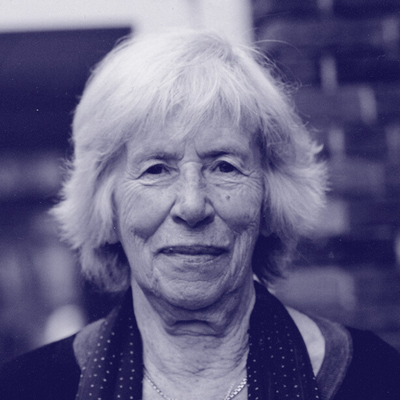
Nele Hertling, Director of the Performing Arts - Academy of Arts Berlin
©Inge Zimmermann
What defines Europe?
I belong to a generation for whom, as children, the experience of war became very conscious and present. Most of the neighbours around us in Germany were our “enemies” — that is why the war was fought.
The end of the war was officially regarded as a 'collapse,' understood by only a few as a “liberation.” I myself, the child of a Jewish mother and raised in an atmosphere of resistance and fear, struggled to find my bearings within this contradiction between the relief at home and the feelings of a “lost” war, as it was conveyed by the surrounding environment.
When, at the beginning of the 1960s, I spent holidays with my children on the Dutch coast, I had to deal with the fact that the local children were prevented from playing with the “Germans.” And in Paris we tried, on the street or in the metro, to avoid speaking German as much as possible.
What could Europe mean for us? What defines it after these experiences?
A Europe as I envision it, and for which we commit ourselves with conviction, is a large community of people of the most diverse origins, languages, histories, and cultures, yet held together by curiosity about one another, by an awareness of differences and the tolerance that arises from them — unity in diversity is, for me, the European idea. This can only be achieved if we, the citizens of Europe, understand that it is we who must actively participate and ourselves assume responsibility in this process. The shaping of a Europe of citizens cannot be left solely to anonymous institutions and politicians.
Europe is a vast geographically defined space in which all who inhabit and enter it can move freely and feel welcomed with respect. The overwhelming diversity that this space offers makes it an exciting and challenging task.
