Ruth Koleva
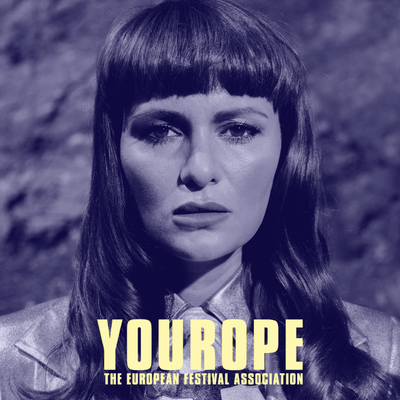
Ruth Koleva, Head of Programme - Sofia Live Festival & SoAlive Music Conference
Europe Is Not Complete Until Everyone Is Heard
I grew up believing Europe was more than a geography. It was a promise.
A promise that talent matters more than where you were born. That culture is not measured by GDP. That diversity is something to protect, not simply celebrate in speeches. That democracy means every voice counts – not only those coming from the biggest capitals, the largest markets or the loudest industries. After fifteen years working across the European music ecosystem, I have learned that this promise is still unfinished.
Europe has become remarkably good at speaking about diversity while quietly accepting structural inequality. We celebrate cultural richness, yet our funding, our markets, our algorithms and our industries continue to concentrate visibility in remarkably few places. The result is that millions of Europeans living in smaller countries, smaller language communities and peripheral regions are expected to compete in a system that was never designed for them.
Culture is one of the few things capable of making Europe feel real. Not institutions or legislation. Culture.
Festivals are where Europeans actually meet one another. They discover unfamiliar languages without needing translation. They build friendships before they build political opinions. They understand that identity is not something threatened by diversity, it is strengthened by it. That is why festivals carry a responsibility that goes far beyond entertainment. We are temporary cities where democracy is practised every day. We create spaces where disagreement is possible without hatred, where difference becomes curiosity instead of fear, and where thousands of people experience what an open society actually feels like. But Europe cannot ask culture to build bridges while allowing culture itself to become increasingly unequal.
Today, independent artists struggle to compete against platforms designed around scale instead of diversity. Entire linguistic communities disappear from recommendation systems. Artificial intelligence is trained on decades of human creativity without meaningful consent or fair remuneration. Local music ecosystems are expected to survive in a market that rewards global dominance while systematically overlooking regional identity. If Europe truly believes cultural diversity is one of its founding values, then it must defend it not only in museums and policy papers, but inside the digital economy that increasingly shapes what people discover, hear and remember. For me, Europe is strongest when Sofia matters as much as Stockholm. When Belgrade matters as much as Berlin. When Tirana, Skopje, Sarajevo, Bucharest or Ljubljana are not treated as "emerging markets" forever, but as equal contributors to our shared cultural future.
A united Europe should not erase differences. It should ensure those differences have an equal opportunity to exist. The next generation of European artists should not have to move away, change language or imitate somebody else's culture simply to be discovered. They should be able to succeed because Europe values originality wherever it comes from.
That is the Europe I believe in. Not a Europe of centres and peripheries. A Europe where every culture has the same right to be visible, to be heard, and to shape our common future.
Courtesy of YOUROPE - The European Festival Network.
Also published in YOUROPE’s dedicated ’About Europe’ website section.
