Signe Lopdrup
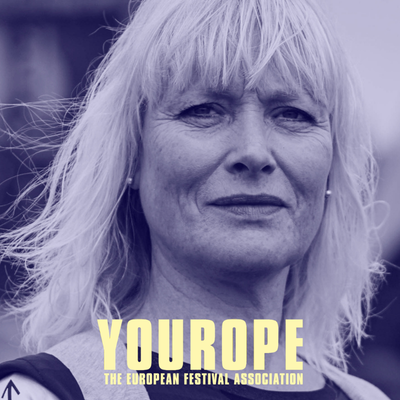
Signe Lopdrup
CEO, Roskilde Festival
© Lasse Mortensen
Growing More Than Vegetables
A few years ago, a group of volunteers set out to create a community garden on an old farm right next to Roskilde Festival’s camping area.
The pace here is different from the one in front of the music stages. You can get your hands in the soil, chop vegetables for a shared meal or simply strike up a conversation with someone you have never met before.
Anyone can join in, regardless of experience. Here, volunteers grow vegetables, but also something less tangible: a sense of belonging to a community.
As a non-profit and philanthropic festival that brings together more than 100,000 young people in a temporary festival city, Roskilde Festival has a unique opportunity – and a responsibility – to create spaces where young people can encounter art, one another and new perspectives on the world they are part of.
In recent years, we at Roskilde Festival have explored how young people imagine the future, and what gives them hope and motivates them to take action.
This has taught us something important.
What we have seen is that young people’s hopes and visions of a better future are often tangible and rooted in everyday life. They are about the way we live together and the communities we are part of. Hope can be something we create together.
At the same time, we have seen that art can help create spaces where there is room for imagination. Art and culture cannot give us the answers to the climate crisis, war or the other major challenges facing Europe.
But art can open our imagination to what is possible.
As a festival, we do not simply want to invite more young people to be part of the audience. We would rather give more people the opportunity to participate, create and bring new perspectives into play.
To me, access to art is therefore also about participation: about experiencing that your perspective has value and that you can contribute to the community you are part of.
Creating access to art and to the communities that grow around it is, to me, an important part of culture’s role in Europe.
Europe’s future is shaped by major political decisions and institutions. But it is also created closer to home: in places where people meet, experience difference, take responsibility for one another and discover that they can create something together. This is where culture can help strengthen the social cohesion that Europe needs in uncertain times.
Perhaps that is a big idea to find in our small community garden in Roskilde.
But my experience is precisely that change can begin on a small scale. Europe’s future should not only be created for the next generation.
We need to create more communities and cultural spaces where young people can help imagine and shape that future.
Courtesy of YOUROPE - The European Festival Network.
Also published in YOUROPE’s dedicated ’About Europe’ website section.
